A European Bath Beats Any Spa Membership
The modern wellness industry sells connection and escape, but the deepest restoration is found alone, in a well-made tub.
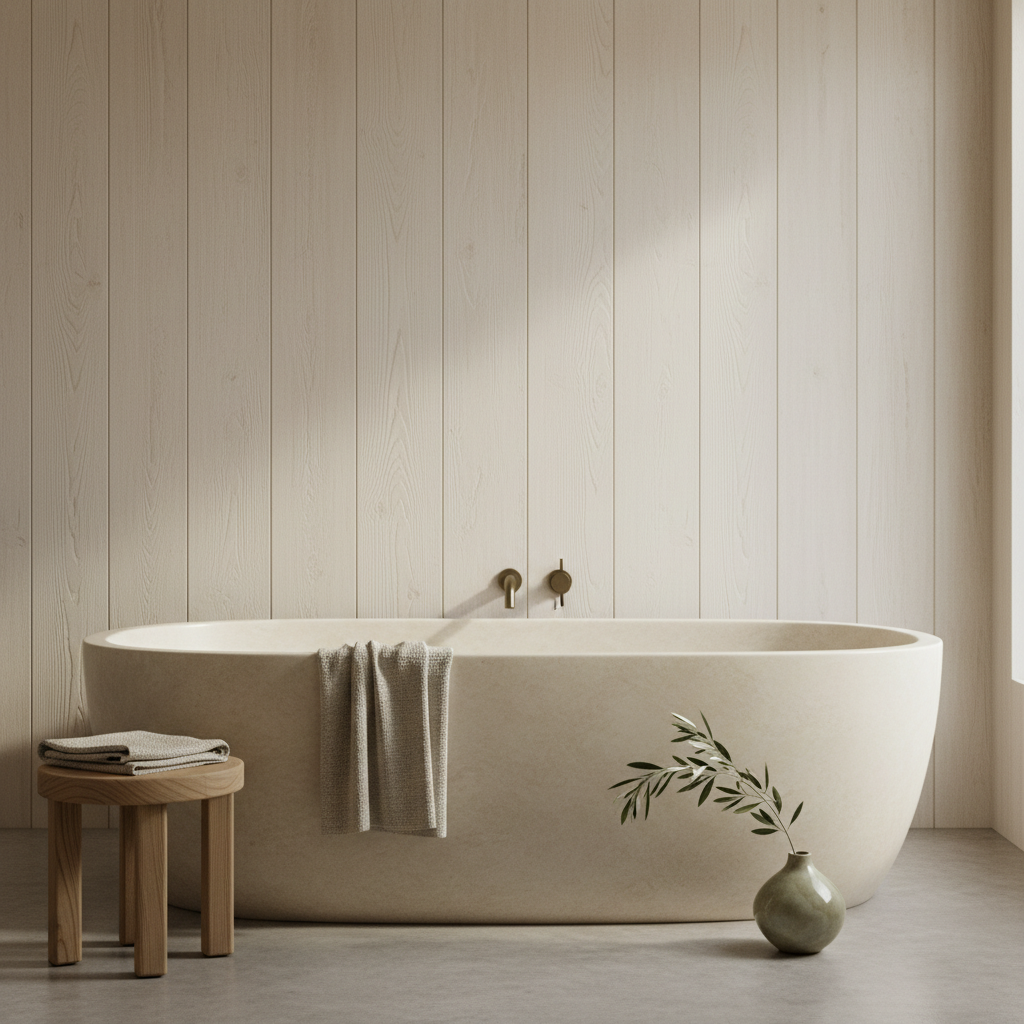
The pursuit of wellness has become a scheduled activity. It is a class, a membership, a retreat booked months in advance. We seek appointments for sensory deprivation, pay for access to rooms of manufactured silence, and follow instructors through guided meditations. We have, in effect, outsourced our own restoration. The industry built around it promises a respite from the pressures of modern life, yet it does so by adding another item to the calendar.
This approach mistakes the nature of genuine quiet. It frames well-being as a commodity to be consumed in designated spaces, at designated times. True repose, however, is not an event. It is a state of being, cultivated through private, unassuming ritual. It is found not in a branded spa or a wellness center, but in the solitude of one’s own home. Specifically, it is found in a bath.
We do not mean the shallow, narrow basin common in modern construction—a feature of convenience designed for hasty ablutions. We refer to the European ideal of a bath: a deep, sculptural vessel that invites a full, supine immersion. It is a piece of domestic architecture designed for soaking, not simply for washing. It is a destination in itself.
To enter such a bath is to cede control. The body, submerged in water, becomes weightless. The day’s accumulated tensions—the subtle bracing of muscles in traffic, the hunched posture over a screen—begin to dissolve. The gentle pressure of the water and the enveloping warmth offer a primal comfort that no massage or treatment can fully replicate. It is a passive, solitary act.
To soak is to step out of time, to refuse the calendar’s demands for even an hour.
The spa, for all its curated serenity, remains a public space. There is an implicit performance of relaxation, an awareness of others. The experience is mediated by staff, governed by appointments, and concluded with a transaction. It is a temporary escape, a place one visits. A proper bath, by contrast, is a tool for living that is permanently at one’s disposal.
The Architecture of Retreat
The quality of the retreat is defined by the quality of the object. A tub carved from stone or cast in heavy enamel holds heat differently than a flimsy acrylic shell. The tactile sensations of these materials—their coolness to the touch, their satisfying heft—are integral to the ritual. The sound of water filling a substantial basin is a different sound, heavier and more calming.
This is the distinction between a utility and a sanctuary. When a bath is conceived as a central element of a private space, it transforms the room into a place of profound stillness. The daily or weekly act of drawing a bath becomes a restorative practice, an anchor in the rhythm of life. It does not require a booking, a commute, or an additional expense. It asks only for time.
The commodified wellness experience offers a temporary reprieve. The private ritual of a deep bath offers a sustainable practice. One is a service, purchased and consumed. The other is a habit, integrated and embodied. It is the difference between being a client and being at peace.
This is not an argument against pleasure, but a meditation on its source. By building genuine moments of retreat into the fabric of our homes, we reduce the need to seek them elsewhere. We create a foundation of well-being that is personal, private, and always available.
Further explorations on the wellness house, with original plates and a directory of resources from Across Europe, are found in Edition V of the journal.
The longer reading lives in the magazine.
This essay is one observation. Edition V carries the plates, the studies and the directory of Across Europe — thirty pages, on uncoated stock, posted across Europe.
Continue reading
All essays → Editorial · 8 min
What a house is worth, and what it costs
On the difference between price and value, and why we have stopped using the first to describe the second.
 Markets · 11 min
The quiet market
Why the most interesting European homes are no longer listed, and what that means for the people looking for them.