A Wall Is Never Just White
In Provence, a wall is never merely white; it is a quiet, geological record of the land itself.
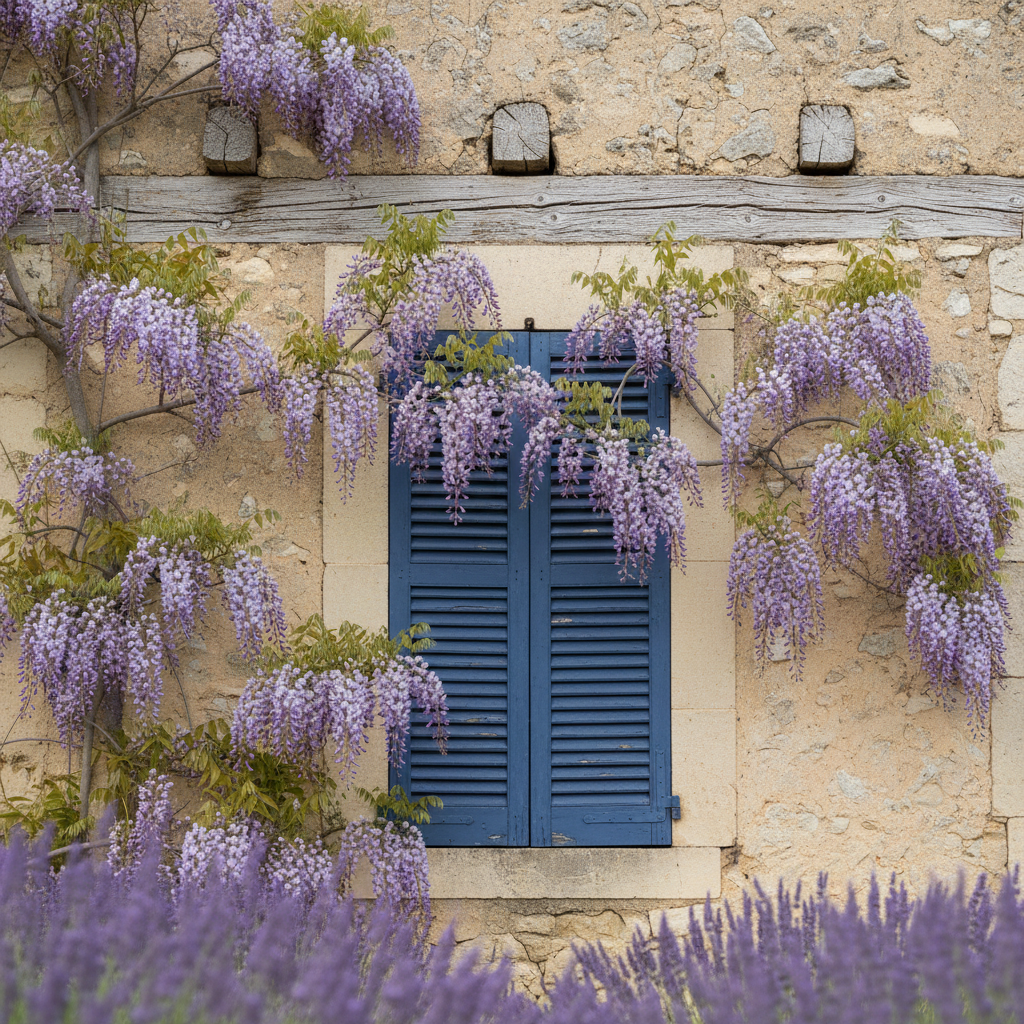
The imagination conjures a specific vision of Provence. It is a place of severe light and sharp shadow, of lavender fields and cicada song. In this vision, the farmhouses and village homes are made of sun-bleached stone, their walls rendered in a brilliant, chalky white against a cerulean sky. It is a lovely picture, and not entirely untrue.
Look closer, however. That white wall is not quite white. It is the color of heavy cream, or pale straw, or old bone. In the low light of morning or evening, it might blush with pink or hold a residual, dusty warmth. The color is a subtle thing, but its source is foundational.
The walls of Provence owe their complexion to the earth, and specifically to the ochre quarries of Roussillon. Here, in a landscape sometimes called the Colorado Provençal, the soil is saturated with a rich palette of iron oxides. For centuries, this pigment has been dug from the ground and mixed into the local plasters and lime washes.
This is not a decorative choice so much as an elemental one. The color of a Provençal building is a direct expression of its geology. It is architecture as an extension of the landscape, a structure built not just on the land, but of it.
The Color of Light
A pure, industrial white would be a brutal choice for this environment. Under the unfiltered southern sun, it would create a glare that is both visually and physically uncomfortable. It would feel alien, a sterile imposition on a landscape defined by texture and softness.
The ochre-based hues, by contrast, enter into a dialogue with the light. They absorb the midday heat and reflect a softer, more humane glow. The color is never static; it shifts with the angle of the sun and the mood of the sky, warming a gray day and tempering a brilliant one.
The hue of a Provençal wall is not a color so much as a condition of the light.
The result is a harmony that settles over the region’s villages. The deep blue of a wooden shutter, the faded green of a door, the terracotta of a pot—all these tones are complemented by the warm, forgiving palette of the walls. The buildings feel rooted, inevitable. They belong to their place because they are made from it.
To understand this is to move past a surface-level appreciation of the region. The color of a wall ceases to be an aesthetic detail and becomes a story of origin, a quiet testament to the ground beneath one’s feet.
The longer read on Provence, with plates and a full directory, is available in Edition IV of the journal.
The longer reading lives in the magazine.
This essay is one observation. Edition IV carries the plates, the studies and the directory of Provence, France — thirty pages, on uncoated stock, posted across Europe.
Continue reading
All essays → Editorial · 8 min
What a house is worth, and what it costs
On the difference between price and value, and why we have stopped using the first to describe the second.
 Markets · 11 min
The quiet market
Why the most interesting European homes are no longer listed, and what that means for the people looking for them.