A Wall Must Learn to Sweat
In the sherry bodegas of southern Spain, architecture is not a passive container but an active participant in fermentation.
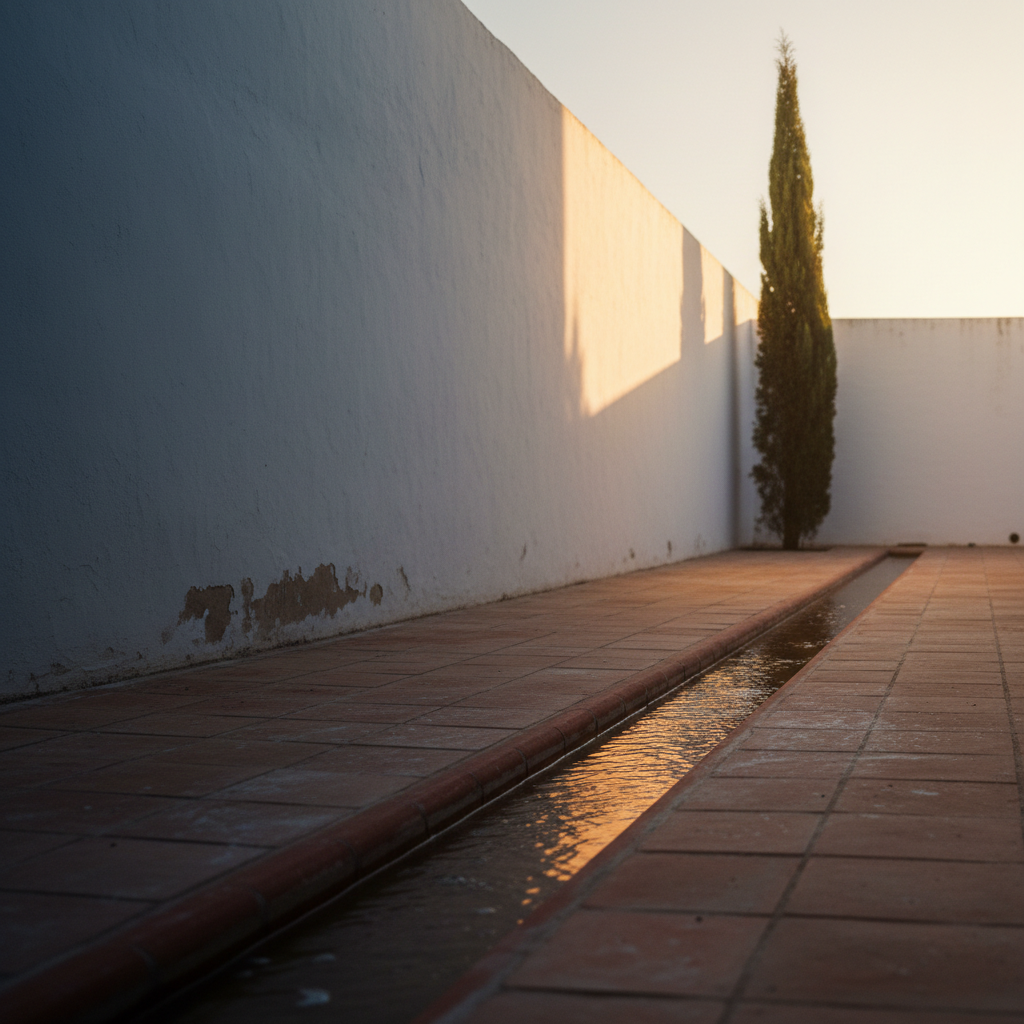
The plains of Andalusía are a lesson in heat. In Jerez de la Frontera, the sun does not just shine; it presses down with a physical weight, turning the air into a shimmering, palpable substance. It is a climate of extremes, and an unlikely birthplace for one of the world’s most delicate wines.
Yet it is here that sherry has been made for centuries, aged in vast warehouses known as bodegas. These are not dark, subterranean cellars, but soaring, cathedral-like structures that stand above ground. Their existence presents a paradox: how to protect the slow, steady process of aging from the brutal temperament of the Andalusian summer.
The answer is found not in fighting the heat, but in negotiating with it. The bodega is a masterclass in passive climate control, an architectural treatise on patience and porosity. Its primary tool is not machinery, but masonry.
The walls of a traditional sherry bodega are thick, often exceeding a meter, and constructed from local, porous stone and lime-based mortar. They are designed not to seal the building off from its environment, but to engage with it in a slow, deliberate dialogue. They are built to breathe.
The bodega does not fight the heat; it negotiates with it.
Twice a day, workers walk the halls, spraying water onto the earthen floors. Made of *albero*, a sandy, compacted soil, the ground drinks the moisture and holds it. The air becomes humid, and this is where the genius of the architecture reveals itself. The walls, through capillary action, begin to draw this moisture inward.
A Breathable Masonry
This is what is meant by a “sweating” wall. It is not condensation, but a slow, controlled release. As the moisture absorbed from the floor travels through the porous masonry, it evaporates from the vast surface area of the walls, cooling the interior just as perspiration cools the skin. The result is a stable, cool, and humid microclimate—the precise conditions required for the *flor*, the delicate veil of yeast that gives fino and manzanilla sherries their character.
This is a system, not a single feature. The architecture works in concert. The ceilings are impossibly high—often more than ten meters—allowing hot air to rise far above the casks. Small, high windows, oriented to the prevailing westerly winds, are opened at night to draw in the cool, humid air off the Atlantic, and closed during the day to capture it.
In an era of hermetically sealed, air-conditioned spaces, the bodega is an elegant rebuttal. It consumes almost no energy. It is a living, breathing organism, a sensitive instrument tuned to the rhythms of the day and the season. Its performance depends on the materials of its construction and the daily rituals of its human stewards.
To stand inside one is to feel the quiet intelligence of its design. The air is soft, cool, and smells of damp earth, old wood, and the sharp, saline aroma of the wine. It is a reminder that a building can be more than a shelter; it can be a partner.
The longer reading, with plates and a directory of Andalusía, Spain, lives in Edition II of the magazine.
The longer reading lives in the magazine.
This essay is one observation. Edition II carries the plates, the studies and the directory of Andalusía, Spain — thirty pages, on uncoated stock, posted across Europe.
Continue reading
All essays → Editorial · 8 min
What a house is worth, and what it costs
On the difference between price and value, and why we have stopped using the first to describe the second.
 Markets · 11 min
The quiet market
Why the most interesting European homes are no longer listed, and what that means for the people looking for them.