Closed All Afternoon
In the south of Spain, the hottest hours of the day are given over to a deep and necessary quiet.
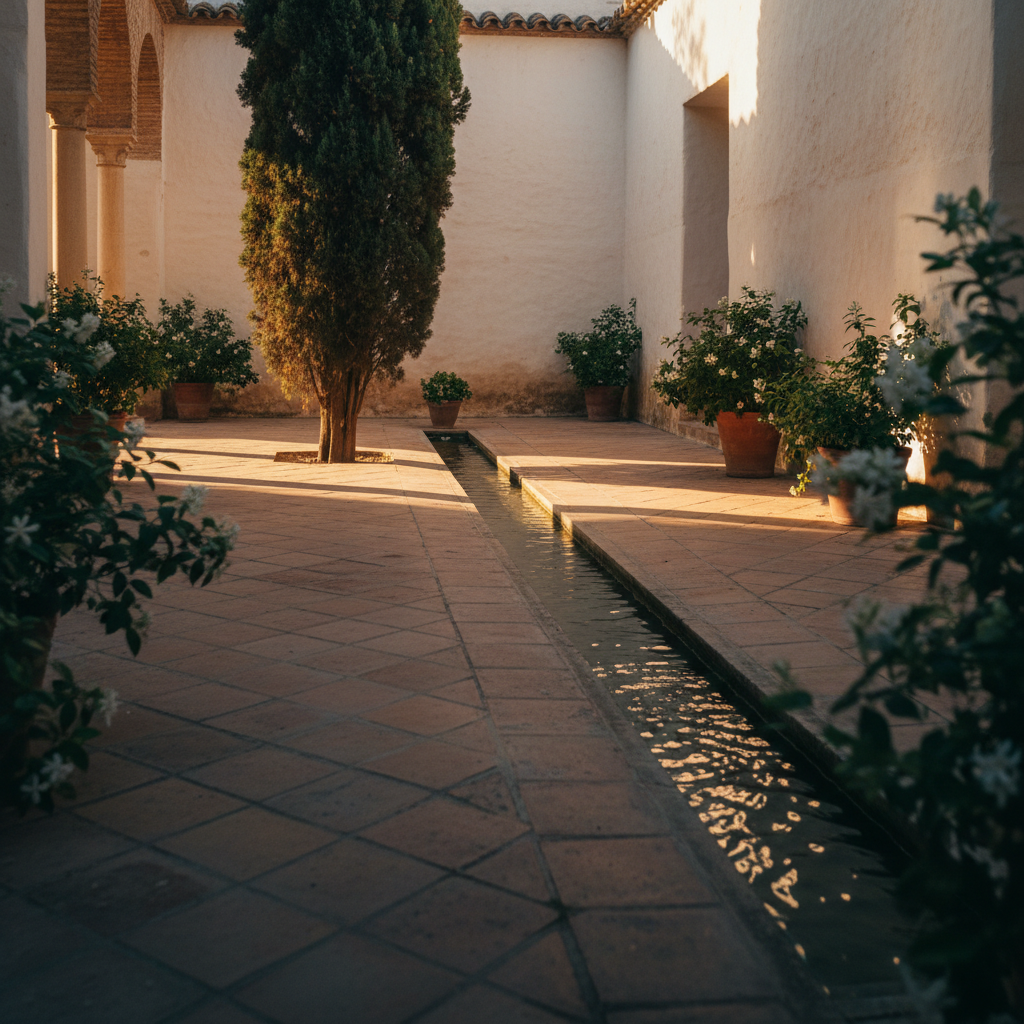
To walk through a southern town in the afternoon is to witness a world drawn inward. The streets of Andalusía,Spain, so full of life in the morning, are silent after lunch. The sun is high and direct, bleaching the color from the cobblestones and casting sharp, dark shadows that offer little relief. Everything is closed. Not just the shops and the markets, but the houses themselves.
The windows are sealed, their wooden shutters, or ‘persianas’, drawn tight. The heavy doors are latched. From the outside, the whitewashed villages appear abandoned, asleep under the immense, unwavering heat. This quiet, however, is not one of absence. It is a presence. It is the deep, collective breath of a culture that understands the rhythms of its climate, and has built its life, and its architecture, in response.
This is not merely a ‘siesta’ in the commonly understood sense of an individual’s nap. It is the rest of the house itself. Southern architecture is designed for this daily retreat. Thick, heat-absorbing walls, interior courtyards, and strategically placed openings are not just aesthetic choices; they are the functional grammar of a conversation with the sun.
The house is an instrument for managing light and heat. During the morning, it is open and porous, allowing breezes and daily life to flow through. But as the sun reaches its zenith, the house is deliberately sealed. It becomes a cool, dark cavern, a sanctuary from the thermal assault outside. The stone floors remain cool to the touch. The air, trapped since the morning, holds a memory of coolness.
To give a house a long, deep sleep in the afternoon is a mark of respect, both for the building and for the life within it.
Inside, the world is transformed. The bright, sharp reality of the exterior gives way to a muted, gentle interior. Light enters only in thin, dusty slivers through the slats of the shutters, painting transient stripes on the walls and floors. The primary sensory input is not sight, but sound and feeling. The distant trickle of a fountain in the courtyard, the hum of a fly, the profound stillness.
The Inner Realm
Life within the sleeping house moves at a different pace. This is a time for quiet. It is for the low murmur of conversation, the rustle of a newspaper, the simple act of sitting in a chair and feeling the coolness of the terracotta beneath your feet. It is a pause, a caesura in the day’s prose, that allows for a different kind of existence.
The practice speaks to a philosophy of acceptance rather than confrontation. Instead of fighting the heat with the brute force of mechanical cooling, the house yields to it, creating a pocket of temperate calm through intelligent, passive design. It acknowledges a power greater than itself—the sun—and adapts accordingly. The home is not a static container for living, but an active participant in the daily climate.
Then, as the afternoon wanes and the sun’s angle softens, the reawakening begins. It happens slowly. A shutter is pushed open. A door is unlatched, letting a triangle of golden light fall into a dark hall. The sounds of life begin to spill back into the streets. The house has rested, and is ready for the evening.
Further observations on the domestic rhythms of southern Spain, with plates and a directory for Andalusía, are reserved for Edition II of our journal.
The longer reading lives in the magazine.
This essay is one observation. Edition II carries the plates, the studies and the directory of Andalusía, Spain — thirty pages, on uncoated stock, posted across Europe.
Continue reading
All essays → Editorial · 8 min
What a house is worth, and what it costs
On the difference between price and value, and why we have stopped using the first to describe the second.
 Markets · 11 min
The quiet market
Why the most interesting European homes are no longer listed, and what that means for the people looking for them.