The Angle of Repose in Tuscany
The modest pitch of a Tuscan roof is more than a matter of engineering; it is a quiet record of the hands that built it.
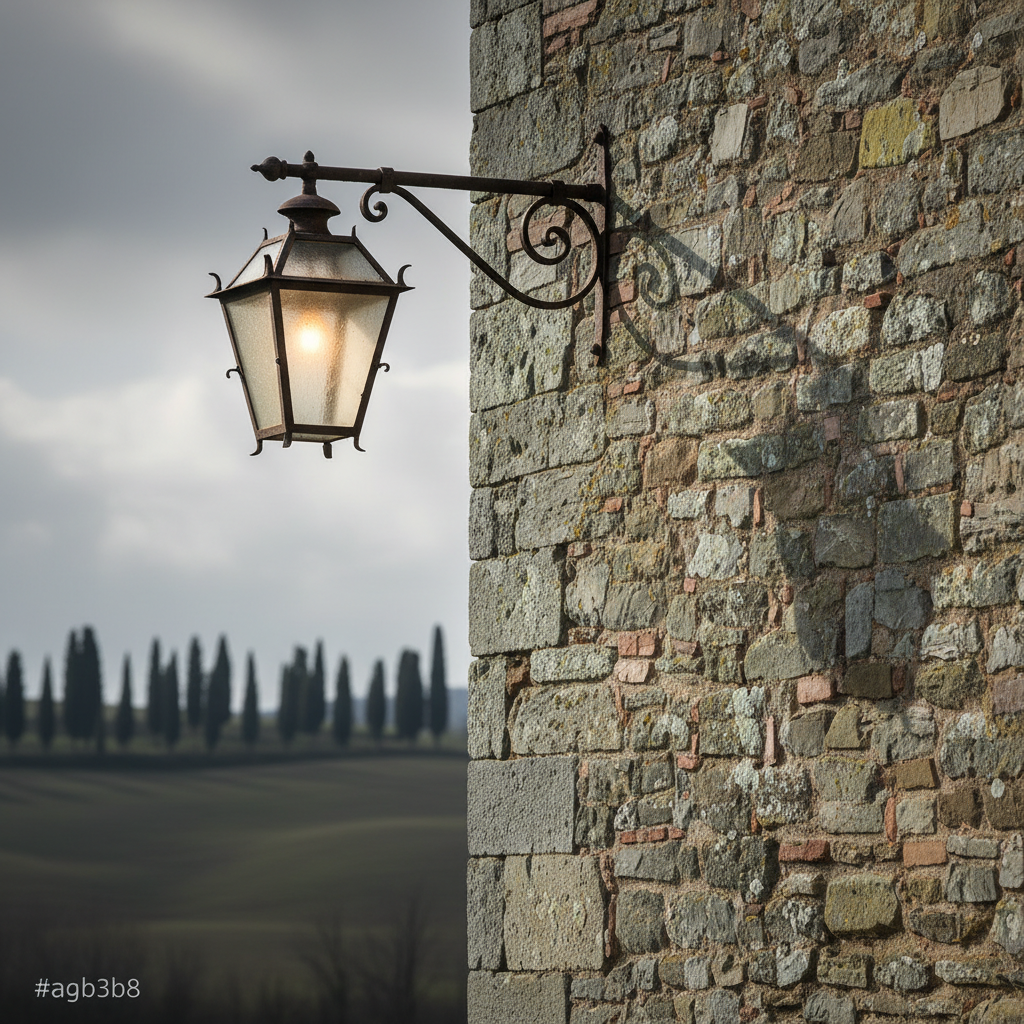
The farmhouses of the Val d’Orcia appear as natural extensions of the land. They rise from the clay hills, built of the same earth and stone, and settle into the landscape with a permanence that feels geological. Their most consistent feature, seen from any winding road, is the low, gentle slope of a terracotta roof. It is an element so ubiquitous that it risks becoming invisible, a simple fact of the scenery.
Yet this angle is not a given. It is a choice, or rather, the outcome of a thousand choices made by masons and carpenters over centuries. In a region that sees its share of rainfall, a steeper pitch might seem more logical, a quicker way to shed water and protect the structure within. The Tuscan roof, however, resists this simple efficiency.
It offers instead a more subtle geometry. The shallow slope of the traditional ‘casale’ speaks to a different set of priorities, a different relationship between builder, material, and climate. To ask why a roof is pitched at such an angle is to ask about the people who sheltered beneath it.
A roofline is a statement of intent, a quiet negotiation between a structure and the sky.
The answer lies not in modern blueprints, but in an economy of means. The traditional roof is a heavy construction of interlocking ‘coppi’ and ‘tegole’ tiles, each formed by hand from local clay. These tiles, combined with the substantial timber beams required to support them, represented a significant investment of labor and resources.
An Economy of Means
A steeper roof would have demanded more of everything: more tiles to cover the expanded surface area, larger and more complex timber framing to support the increased weight and height, and more hours of skilled work to assemble it. The shallow pitch, therefore, was an act of profound pragmatism. It was the angle of ‘just enough’—steep enough to prevent leaks, but no steeper.
This was not corner-cutting. It was a form of material honesty, born from a world where resources were finite and human effort was the primary currency. The builders found the point of equilibrium where the structure would endure without demanding an excess of the landscape or its people. The roofline is a direct reflection of a culture that understood its own limits and found a quiet grace within them.
The slope is a signature of its builders. It tells of a time when architecture was a collaboration with gravity and a careful husbanding of materials. It suggests a patience that we have largely lost, an acceptance that a thing need not be dramatic to be effective, nor excessive to be beautiful.
Like the weathered stone walls upon which it rests, the Tuscan roof is a lesson in endurance. It does not fight the elements with sharp angles and aggressive forms. Instead, it settles into a long, slow conversation with them, its gentle slope a gesture of deference, not submission.
The form is a vessel for a story about a place and its people. The precise angle of a roof, repeated across a valley, becomes a line of cultural poetry, written against the sky.
Further exploration of the region’s material culture, accompanied by a full directory and original plates from Tuscany, can be found in Edition III of our journal.
The longer reading lives in the magazine.
This essay is one observation. Edition III carries the plates, the studies and the directory of Tuscany, Italy — thirty pages, on uncoated stock, posted across Europe.
Continue reading
All essays → Editorial · 8 min
What a house is worth, and what it costs
On the difference between price and value, and why we have stopped using the first to describe the second.
 Markets · 11 min
The quiet market
Why the most interesting European homes are no longer listed, and what that means for the people looking for them.