The Annual Whitewashing of Andalusía’s Walls
The whitewashing of southern Spain's villages is less an aesthetic choice than one of climate, public health, and timeless ritual.
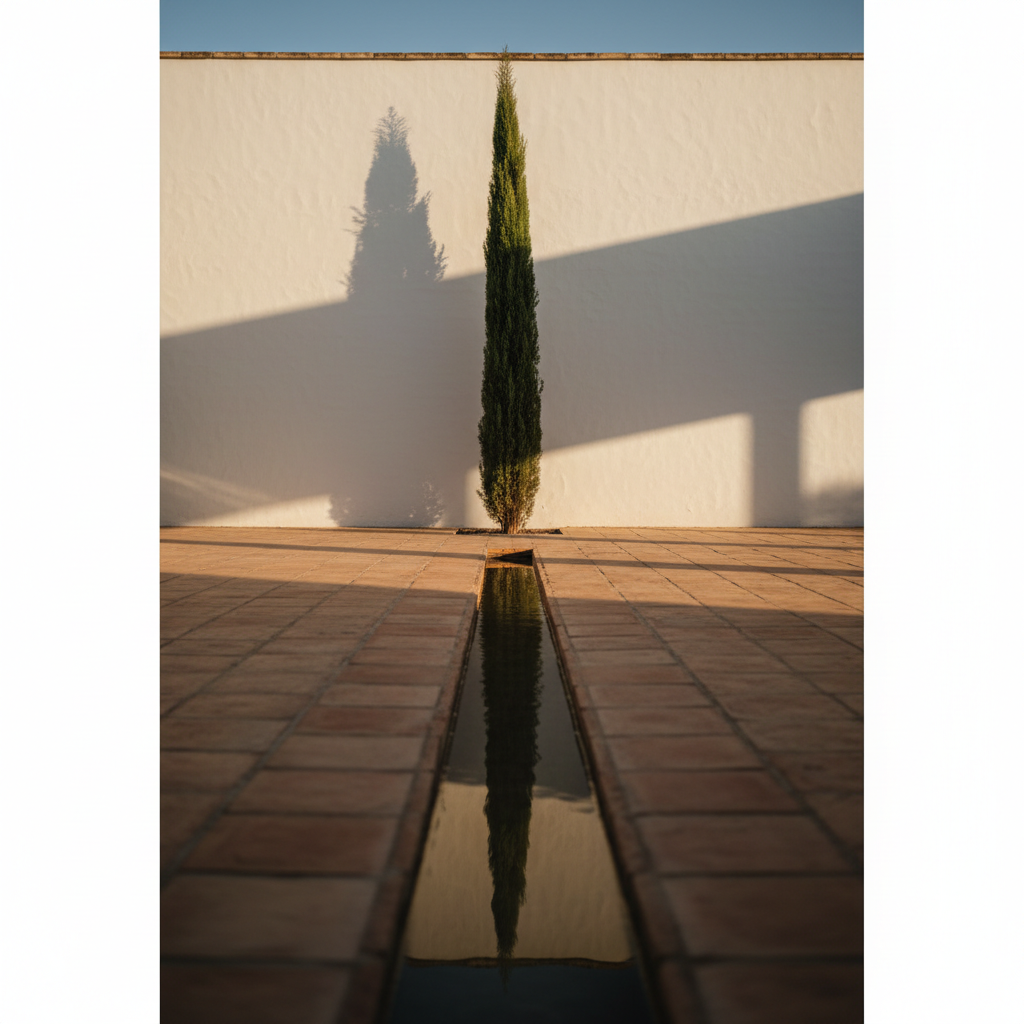
To see the pueblos blancos of Andalusía in late spring is to witness a region renewed. The hills of southern Spain, rolling under an increasingly assertive sun, are punctuated by villages of a startling, uniform white. This brilliance is not a static condition, but the result of an annual ritual that binds the community, the home, and the landscape in a cycle of maintenance and care.
As the threat of winter rain recedes, residents carry buckets of lime wash—cal—through the cobbled streets. The tools for the work are not rollers and spray guns, but traditional esparto grass brooms and brushes. With these, they apply the chalky liquid to the exterior and interior walls of their homes and courtyards. It is a slow, methodical process, performed by hand, generation after generation.
The primary motivation is not decorative, but practical. Andalusian summers are long and relentlessly hot. A coat of white reflects the maximum amount of solar radiation, deflecting heat and keeping the warren of thick-walled homes cool inside. It is a vernacular form of climate control, an architectural intelligence developed over centuries of close observation.
The material itself is essential to this intelligence. Lime wash is not a synthetic, impermeable paint. It is a simple mixture of slaked lime and water, a natural material that allows the walls to breathe. Moisture is not trapped within the plaster, but is allowed to evaporate, which prevents the damp and decay that a sealed wall might suffer.
The Public Good
Historically, the annual whitewashing served a vital role in public health. Lime is caustic, and its application has a powerful antiseptic and insecticidal effect. Before the advent of modern sanitation, the yearly coating of cal was a way to purify the village, cleansing the walls of a winter’s worth of bacteria and grime. It was a collective act of hygiene, a way to prepare the community for the heat of summer and guard against disease.
The wall is not a static surface, but a membrane that breathes with the seasons.
The ritual is as much social as it is architectural. The whitewashing is a shared endeavor, a time when the boundaries between private and public space soften. Neighbors work in concert, their efforts contributing not only to the comfort of their own home but to the resilience and identity of the village as a whole. The town becomes a single organism, collectively renewing its protective skin.
This approach stands in quiet opposition to a modern world that often favors technological solutions over traditional knowledge. Where we now have air conditioning and chemical sealants, the Andalusian tradition offers a lesson in working with a climate rather than fighting against it. The home is not a sealed box, but a porous shelter in conversation with its environment.
This annual repainting reveals a worldview. It suggests that a house is not a finished product, but a living entity that requires continuous care. It places the individual home within the context of the greater community, whose shared standards and rhythms define the life of the place.
This brief account of utility and tradition is part of a longer study. The full reading on the architecture of shade, with accompanying plates from Andalusía, Spain, is presented in Edition II.
The longer reading lives in the magazine.
This essay is one observation. Edition II carries the plates, the studies and the directory of Andalusía, Spain — thirty pages, on uncoated stock, posted across Europe.
Continue reading
All essays → Editorial · 8 min
What a house is worth, and what it costs
On the difference between price and value, and why we have stopped using the first to describe the second.
 Markets · 11 min
The quiet market
Why the most interesting European homes are no longer listed, and what that means for the people looking for them.