The Architecture of the Andalusian Patio Garden
In the courtyards of southern Spain, a few select plants do the essential work of shaping space and tempering heat.
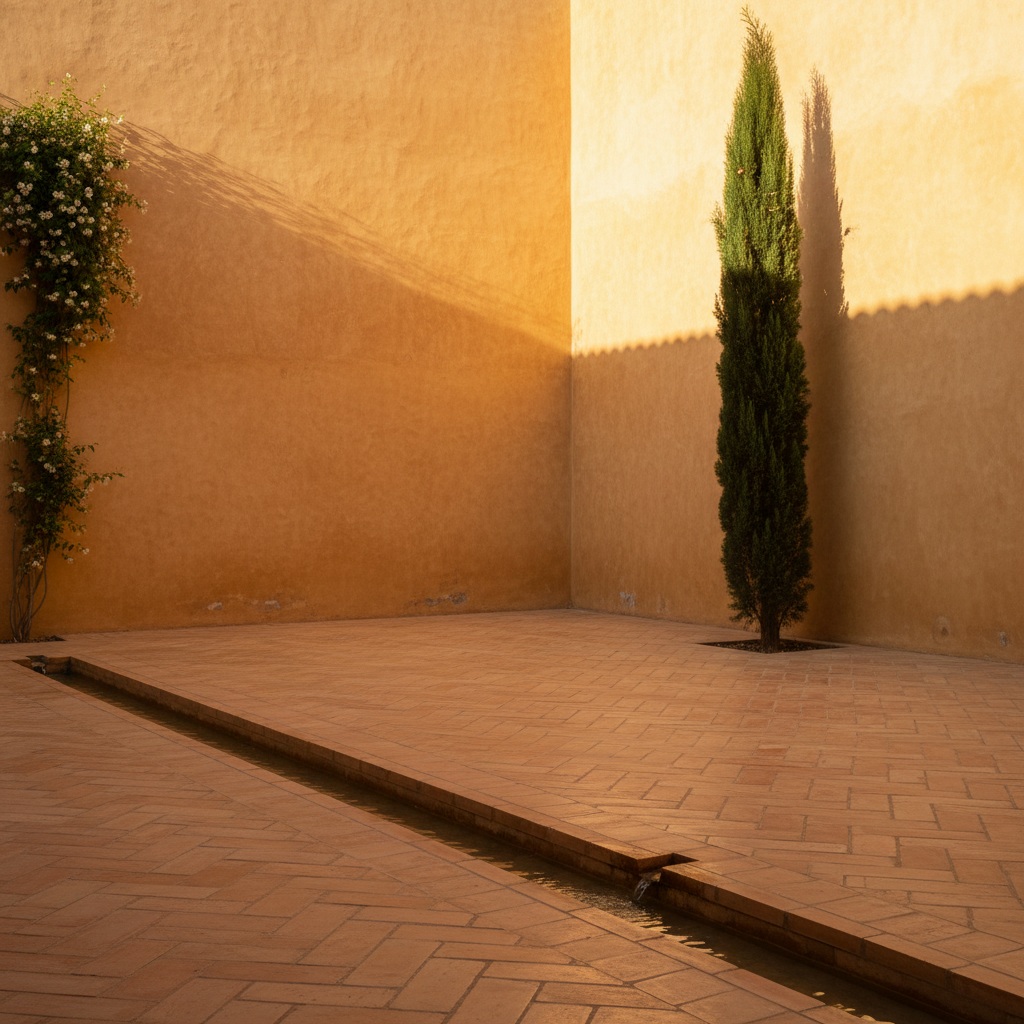
The private courtyards of Andalusía are not gardens in the conventional sense. They are outdoor rooms, architectural spaces defined by plastered walls, terracotta tiles, and the deep shade that offers reprieve from the sun of southern Spain. In these enclosed worlds, plants are not mere decoration; they are functional elements, deliberately chosen for their ability to structure space, manage light, and perfume the air. The effect is a carefully composed tranquility, a lesson in how a few strategic species can create a complete and cohesive environment.
One begins with citrus. The bitter orange or the lemon tree is often the central anchor of the patio, its dense, dark green canopy providing a primary source of shade. Planted in the ground or in a substantial terracotta pot, its purpose is to create a ceiling, a dappled layer between the sun and the floor. In spring, its blossoms release a defining fragrance that fills the entire courtyard, a scent that becomes synonymous with the season. The fruit, hanging like small lanterns in winter, offers a stroke of color against the stark white walls.
Next is the vine. Jasmine, whether the summer or winter-flowering variety, is trained to climb the walls, softening their verticality and drawing the eye upward. It is a plant of the senses. Its perfume, particularly in the cool of the evening, is an invisible architecture, creating an immersive atmosphere. The small white or yellow flowers are points of light against the green leaves, and their fragrance is a constant, subtle presence.
The purpose of the patio is not to replicate nature, but to create a controlled, comfortable, and sensory human environment.
The cypress stands as a vertical counterpoint. Planted in a slender pot or directly in a corner bed, the Italian cypress provides a strong, sculpturesque element. Its form is disciplined, an exclamation point that introduces a formal note to the otherwise organic collection. It draws the gaze skyward, emphasizing the height of the space and connecting the secluded patio to the vast Andalusian sky above. Unlike the broad canopy of the citrus, its shade is minimal and linear, a dark stripe that moves with the sun.
The Ground Layer
Below these taller forms, the geranium is indispensable. Spilling from pots arranged on the ground, mounted on iron racks against the walls, or clustered on steps, its role is to provide color and texture at a human scale. The vibrant reds, pinks, and whites of its flowers are a foil to the prevailing greens and terracotta. It is a humble, hardy plant, thriving in the heat and asking for little, yet its cheerful abundance is fundamental to the patio’s character.
Finally, there is the matter of water and the plants that accompany it. In patios with a small fountain or water rill, ferns and aspidistra are often used. These plants thrive in the damp, cool microclimate created by the evaporating water. Their broad, architectural leaves add another layer of deep green, and their presence reinforces the cooling function of the water feature. They speak of humidity and shade, completing the sensory illusion of an oasis.
These five — citrus, jasmine, cypress, geranium, and fern — form the core of the Andalusian patio’s plant vocabulary. They are not chosen for novelty but for their timeless suitability to the climate and the architecture. Together, they construct a space that is more than the sum of its parts: a shaded, scented, and deeply serene room, open to the sky.
The longer reading on the climate-responsive architecture of the region, with plates and a directory of Andalusía, Spain, is available in Edition II of our journal.
The longer reading lives in the magazine.
This essay is one observation. Edition II carries the plates, the studies and the directory of Andalusía, Spain — thirty pages, on uncoated stock, posted across Europe.
Continue reading
All essays → Editorial · 8 min
What a house is worth, and what it costs
On the difference between price and value, and why we have stopped using the first to describe the second.
 Markets · 11 min
The quiet market
Why the most interesting European homes are no longer listed, and what that means for the people looking for them.