The Bedroom for the Hours In-Between
We have filled our most private space with the artifacts of waking life. It is time to design for the eight hours we actually use it.
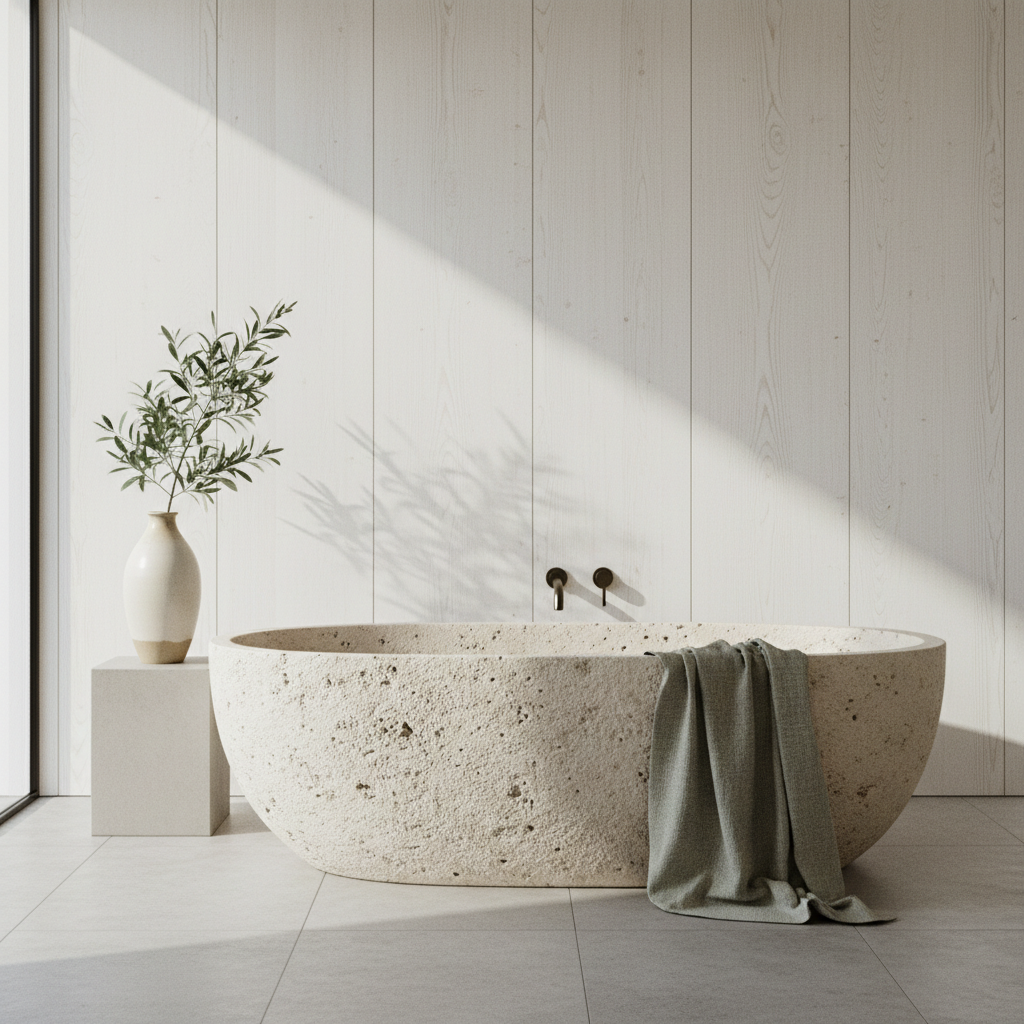
The bedroom is a paradox. It is the most private room in a house, and the one in which we spend the most time. Nearly a third of our lives are spent within its walls, yet we are unconscious for the majority of that tenure. The room is for us, but not for our active selves. It is a space for the person we are when we are not performing, producing, or engaging. It is a room for the quiet hours in-between.
For a space so ostensibly dedicated to rest, however, the contemporary bedroom is conspicuously busy. Take a mental inventory of its contents. Beyond a bed and a wardrobe, one often finds a desk, a television, a collection of charging cables, and perhaps an exercise bike. It has become an auxiliary office, a private cinema, a miniature gymnasium, and a library for the unending scroll of a handheld screen.
This role as a multi-purpose zone is a recent development. It is the result of a culture that prizes productivity above all else, and of homes in which space is at a premium. The bedroom’s traditional function as a sanctuary for sleep and intimacy has been diluted. It is no longer just a room for rest, but a room for everything else, too.
The consequence is an environment of profound functional confusion. The same space intended to quiet the mind at the end of the day is also equipped to stimulate it with work, entertainment, and communication. We ask the room to be a stage for our professional lives and then, with the flick of a switch, to become a silent retreat. This is a difficult transition for any mind to make, and the design of the room often works against it.
The contemporary bedroom has become a theatre for the waking hours, cluttered with the props of a life lived elsewhere.
There is, however, a corrective to this modern condition. It lies in designing the bedroom not for the sixteen hours we are awake, but for the eight hours we are asleep. It requires treating sleep not as a passive state of inactivity, but as the room’s primary and most vital purpose. This is an exercise in discipline and subtraction, an intentional paring away of all that does not serve the room’s essential function.
A Room for Recalibration
Such a room is defined more by what it lacks than by what it contains. There are no screens. The blue light and endless notifications that disrupt circadian rhythms and fuel anxiety are banished. The room’s purpose is to disconnect from the digital tide, not to provide another port for it.
Attention is instead turned to materiality and light. Surfaces are chosen not for visual excitement, but for tactile calm. The cool slide of worn linen, the soft yield of a wool carpet, the quiet grain of a timber headboard. These are textures that ground the body and soothe the senses. They speak a language of quiet permanence.
Light is managed with intention. Heavy curtains or blinds provide the ability to create near-total darkness, signaling to the body that it is time for deep rest. Waking light, when it is invited in, is soft and indirect. The lighting is layered and warm, designed to mimic the gentle rise and fall of the sun.
The resulting space is an intentional void. It is a room unburdened by the demands of the day and cleared of the artifacts of our public selves. By stripping the bedroom of its extraneous functions, we restore its dignity. We create a sanctuary not for doing, but for being. It is a quiet acknowledgment that the hours spent in slumber are as valuable as any others, deserving of a space designed with equal care.
This consideration of the bedroom as a foundational space for wellness is part of a larger study. The complete reading, with architectural plates from Across Europe, is available in Edition V of the journal.
The longer reading lives in the magazine.
This essay is one observation. Edition V carries the plates, the studies and the directory of Across Europe — thirty pages, on uncoated stock, posted across Europe.
Continue reading
All essays → Editorial · 8 min
What a house is worth, and what it costs
On the difference between price and value, and why we have stopped using the first to describe the second.
 Markets · 11 min
The quiet market
Why the most interesting European homes are no longer listed, and what that means for the people looking for them.