The Case for the Nothing Room
We are told that our homes must be optimized, but the greatest luxury may be a room with no purpose.
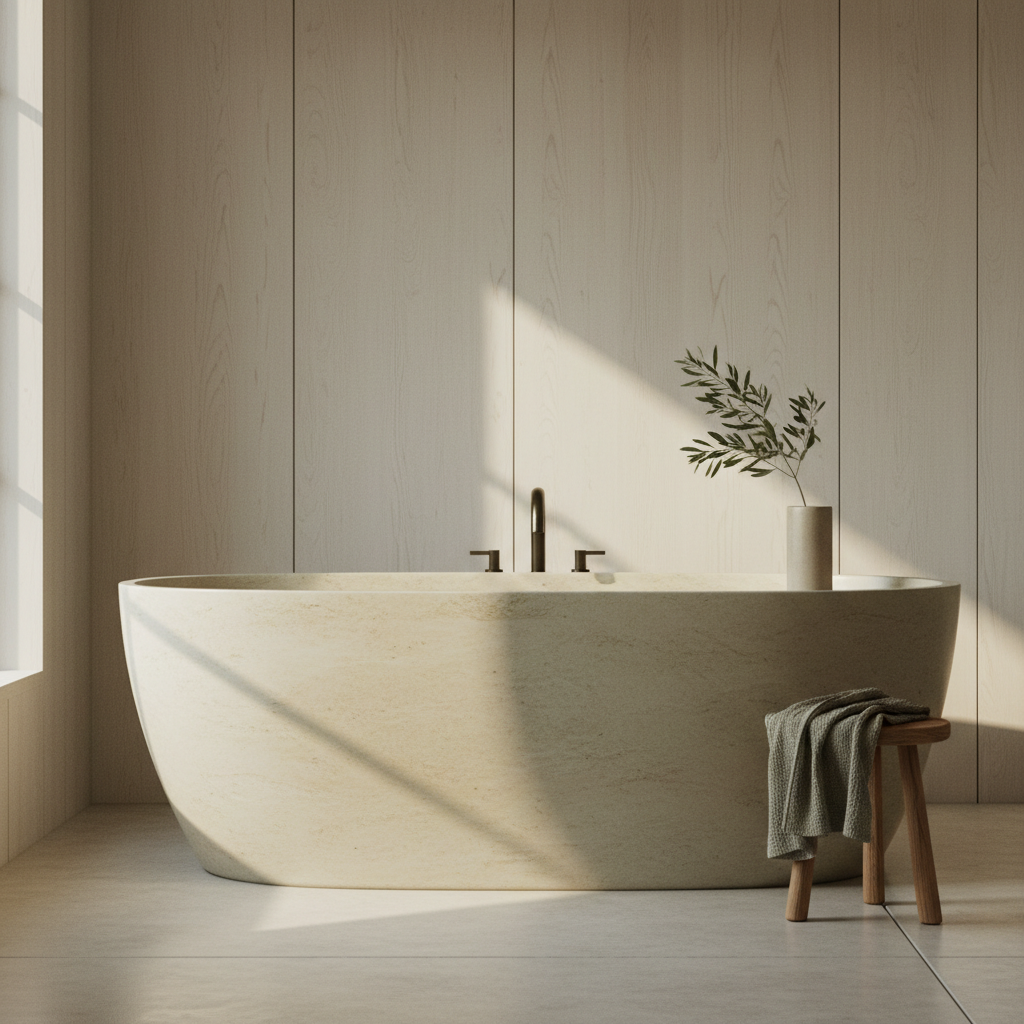
The modern home is a machine for living, a phrase that has evolved from a progressive ideal to a quiet indictment. Every room is assigned a verb: we cook, we entertain, we sleep, we work. The space is a script, and we are its actors, moving from one programmed activity to the next. The pressure is to optimize, to ensure every corner serves a function and contributes to a legible, productive life.
The wellness trend has not escaped this logic. It has, in many cases, intensified it. A wellness-oriented space is often one filled with apparatus: the yoga mat, the meditation cushion, the infrared sauna, the cold plunge. These are tools for scheduled self-improvement, turning the act of restoration into another item on a checklist. The room commands you to *do* wellness, rather than simply be well.
This approach mistakes activity for peace. It suggests that tranquility is a state to be achieved through effort, a summit reached by following a prescribed path of consumption and practice. We are sold objects that promise to deliver us from the anxieties of modern life, yet the accumulation of these objects, and the pressure to use them, can become a source of anxiety itself.
The home becomes a gymnasium for the soul, with all the attendant pressures of performance. Did you use the steam shower today? Did you journal in the reading nook? The space, meant to be a refuge, begins to ask things of us.
We have forgotten how to design for the quiet, subjunctive mood: the state of maybe, of waiting, of simply watching the light change.
The Room as Refuge
Consider, then, the alternative: a room where nothing has to happen. A space defined not by its function but by its lack of one. This is not an empty room, but a spare one. It is furnished with intention, but the intention is not productivity; it is repose. It might contain a single, comfortable chair, a low table, and a window with an open view.
Its materials speak a language of calm. The warmth of wood underfoot, the cool, solid feel of stone, the soft texture of linen. The palette is muted, drawn from the natural world, allowing the eye and the mind to rest. Light is the primary ornament, allowed to move freely across surfaces, marking the slow, unhurried passage of time.
This is not a room for checking email, or for exercise, or even explicitly for reading. It is a space for the private, unexamined moments that constitute a life. It is a place to drink a cup of tea without an agenda, to stare out the window, to be momentarily free from the incessant demands of doing. It is a room that gives permission for idleness.
To design such a space is an act of quiet rebellion. It is to insist that a home’s value cannot be measured solely by its efficiency or its adherence to trend. The true measure of a sanctuary is the degree to which it frees us from expectation.
The longer exploration of the modern wellness house, with architectural plates and a directory from Across Europe, is found within Edition V of our journal.
The longer reading lives in the magazine.
This essay is one observation. Edition V carries the plates, the studies and the directory of Across Europe — thirty pages, on uncoated stock, posted across Europe.
Continue reading
All essays → Editorial · 8 min
What a house is worth, and what it costs
On the difference between price and value, and why we have stopped using the first to describe the second.
 Markets · 11 min
The quiet market
Why the most interesting European homes are no longer listed, and what that means for the people looking for them.