The Cheapest Luxury is a Breeze
In our pursuit of the wellness house, we have overlooked the simple, ancient art of cross-ventilation.
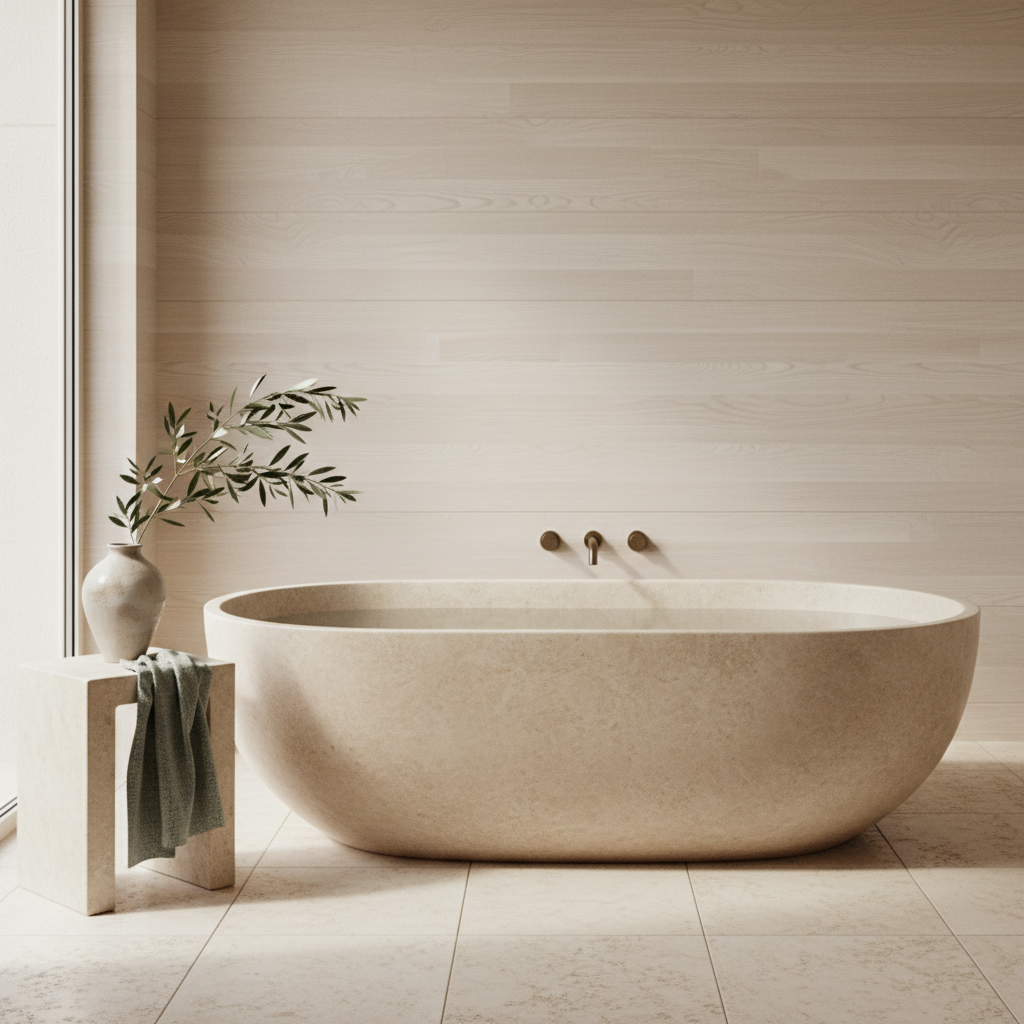
The contemporary dialogue on wellness architecture is flush with new technologies. We are offered circadian lighting systems, air purification filters, and sustainably harvested wood, each promising to enhance our wellbeing. These are worthy pursuits, but they often come with a significant cost and a layer of complexity that distances us from a more fundamental truth of healthy living.
We have become accustomed to the hermetically sealed home. Our houses are envelopes, engineered to insulate us from the world outside. We rely on mechanical systems to heat, cool, and circulate the air we breathe, creating a consistent but artificial interior climate. This reliance has made us forget the simple pleasure and profound benefit of a fresh breeze.
This approach to building assumes that the outside world is something to be managed and mitigated. It is an architecture of control, where the environment is a variable to be neutralized. In doing so, we have built homes that are static and lifeless, their atmospheres sterile and disconnected from the rhythms of the day and the changing of the seasons.
The result is a subtle but persistent sense of stagnation. The air within these spaces can feel heavy, recycled, and thin. We may not always notice it consciously, but our bodies do. We are, by nature, creatures who thrive on sensory input, and the feeling of moving air is a primal signal of vitality and openness.
The Architecture of Breath
Cross-ventilation is the oldest and most elegant solution to this modern problem. It is not a technology, but a design principle. It is the simple act of placing openings on opposite sides of a space to allow air to move through it, driven by natural pressure differentials. It is an architectural dialogue with the wind.
To experience a well-ventilated home is to understand its power. It is the feeling of a cool draft on a warm afternoon, the gentle rustle of curtains, the subtle and constant refreshment of the air. It is a sensory experience that connects the interior of the home to the exterior world, blurring the boundaries between the two.
A home that breathes is a home that is alive.
This principle requires foresight and an understanding of place. It asks the architect to consider the prevailing winds, the path of the sun, and the daily patterns of its inhabitants. It is an act of designing with nature, rather than against it. The result is a home that is not just a shelter, but a living, breathing entity.
This philosophy is particularly resonant in the context of the European countryside, where the connection to the landscape has long been a cornerstone of domestic life. From the airy halls of a Tuscan villa to the breezy layout of a coastal Greek home, the wisdom of natural ventilation is a thread that runs through centuries of vernacular architecture.
The wellness house need not be a complicated or expensive proposition. Before we invest in complex systems, we might first ask if our homes can simply be opened. We might find that the most valuable feature is not one that can be bought, but one that can be invited inside.
The longer reading, with plates and a directory of the European wellness house, lives in Edition V of the magazine.
The longer reading lives in the magazine.
This essay is one observation. Edition V carries the plates, the studies and the directory of Across Europe — thirty pages, on uncoated stock, posted across Europe.
Continue reading
All essays → Editorial · 8 min
What a house is worth, and what it costs
On the difference between price and value, and why we have stopped using the first to describe the second.
 Markets · 11 min
The quiet market
Why the most interesting European homes are no longer listed, and what that means for the people looking for them.