The Courtyard Is a Machine
In the southern heat of Spain, the patio is not an outdoor room, but a sophisticated machine for living.
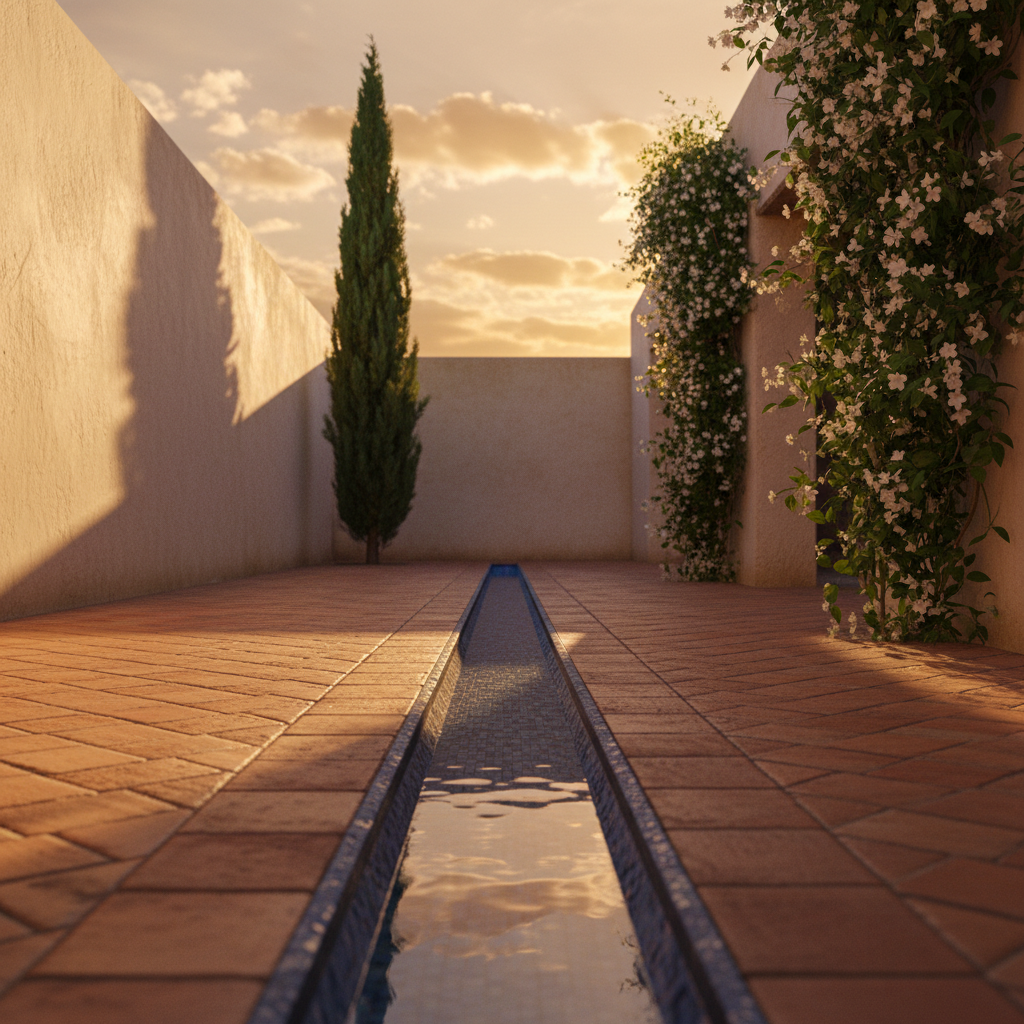
The experience of southern Spain is one of heat. The sun in Andalusía is not a gentle companion but a physical presence, pressing on the landscape with a brilliant, white light. To walk the streets of Córdoba or Seville in the afternoon is to understand the necessity of shade.
Entering a traditional Andalusian house offers a sudden, welcome translation from one world to another. From the glare and noise of the street, you pass through a heavy door into a cool, quiet space organized around a central courtyard. The temperature drops. The light softens. The air stills.
It is easy to mistake these patios for decoration. To the modern eye, they appear as a lifestyle amenity—an outdoor room for relaxing or entertaining, furnished with plants and the gentle sound of water. This is a profound misunderstanding of their purpose. The Andalusian patio is not an aesthetic indulgence, but a functional device.
This architectural form is an inheritance, refined over centuries by Roman and Moorish builders who contended with the same persistent sun. It is a direct and elegant response to a specific climate, born from an era when the only way to condition a building was through its very design. The patio is the engine at the heart of the home’s climate control system.
The patio is not an object to be looked at, but a system to be in.
Its effectiveness comes from a simple, coordinated use of shade, water, and air. The proportions of the courtyard are intentional. Its walls are tall enough to cast deep shadows for most of the day, shielding the interior from direct sun. Awnings, or *toldos*, are often stretched across the opening, creating a ceiling of diffused light.
An Instrument of Climate
Water is the second critical element. A fountain, pool, or narrow rill at the center of the patio cools the air through evaporation. As breezes drift across the surface of the water, the air temperature measurably declines. The sound of trickling water also contributes a powerful psychological suggestion of coolness, a sensory relief from the heat outside.
This temperature difference between the hot street and the shaded courtyard creates a natural convection. The cool, dense air of the patio sinks, displacing warmer air in the surrounding rooms and pushing it upward and outward. The house begins to breathe. This gentle, persistent ventilation circulates fresh air through the living spaces without any mechanical assistance.
The materials used are also part of the system. Thick, plastered walls and terracotta-tiled floors possess high thermal mass. They slowly absorb heat during the day, preventing it from penetrating the interior. As the evening air cools, the walls release this stored warmth, buffering the home against the chill of the night.
In an age of mechanized climate control, this passive strategy feels at once ancient and radically contemporary. The modern air conditioner works by brute force, consuming significant energy to fight against the outdoor environment. The courtyard, by contrast, works with the environment. It is a technology of negotiation, not opposition.
It proposes that comfort can be achieved through intelligent design rather than sheer power. The principles of the Andalusian patio—shading, evaporative cooling, and natural ventilation—offer enduring lessons for building in a warming world. This is not nostalgia, but a case study in resilience.
The longer reading lives in the magazine.
This essay is one observation. Edition II carries the plates, the studies and the directory of Andalusía, Spain — thirty pages, on uncoated stock, posted across Europe.
Continue reading
All essays → Editorial · 8 min
What a house is worth, and what it costs
On the difference between price and value, and why we have stopped using the first to describe the second.
 Markets · 11 min
The quiet market
Why the most interesting European homes are no longer listed, and what that means for the people looking for them.