The Deep Bath Outperforms the Spa
The modern wellness routine is a subscription to services, but a centuries-old European fixture offers a more profound retreat.
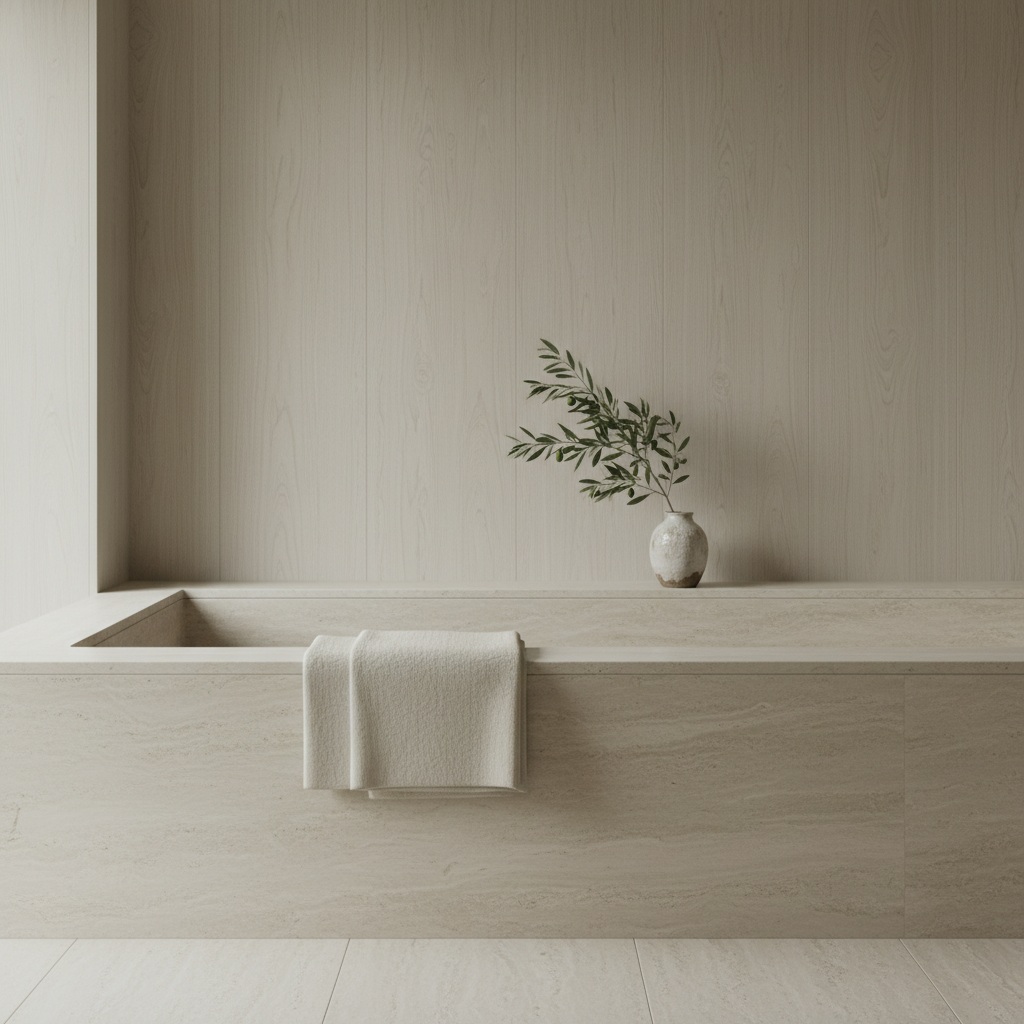
The contemporary idea of wellness is often an external pursuit. It is a class, a membership, an appointment. It is a place one goes to in order to be restored, before returning to a life and a home that are presumed to be the source of the deficit. We seek out saunas, steam rooms, and cold plunges, outsourcing our peace to a service provider.
This model of self-care is built on transaction. In exchange for a fee, one is granted temporary access to tranquility. But an older, quieter tradition proposes a different relationship with restoration—one that is domestic, private, and architectural.
The European bath, as a design object, is distinct from its wider, shallower counterparts. It is built for soaking, not merely for washing. Often deeper, with a more upright back, it invites a level of immersion that changes the posture of the body and the texture of the hour. It is less a utility and more a destination within the home.
In this space, the transaction is with oneself. It is an agreement to set aside a measure of time, not for productivity or social engagement, but for the simple, solitary act of being. The experience is defined not by a menu of services, but by the elemental presence of heat, water, and silence.
The bath is not a place to be seen, but a place to disappear.
It is a retreat from the performative aspects of modern life. The spa, for all its claims of sanctuary, can become another stage—a place to wear the right brand of leisurewear, to be observed in the act of relaxing. The bath is an antidote to this. There is no audience.
A Departure from Performance
The commitment is not to a monthly payment, but to the creation of a home that provides its own sanctuary. It reframes the residence as the primary site of well-being, rather than a neutral zone between external appointments. The architecture itself becomes the infrastructure for a better state of being.
Here, the ritual is stripped to its essence. There are no guided meditations or aromatic diffusers, unless you wish for them. There is only the closing of a door, the turning of a faucet, and the patient wait as the tub fills. It is an act of deliberate inefficiency, a small rebellion against a culture obsessed with optimization.
This practice reclaims time in its most luxurious form: as an uninterrupted, unmonitored, and unmonetized expanse. It is a deep and private quiet, accessible daily, that no membership can truly replicate. The value is not in the escape, but in the return to a home designed for one’s own peace.
Further exploration of the wellness house, with plates and a directory from Across Europe, is available in Edition V of the journal.
The longer reading lives in the magazine.
This essay is one observation. Edition V carries the plates, the studies and the directory of Across Europe — thirty pages, on uncoated stock, posted across Europe.
Continue reading
All essays → Editorial · 8 min
What a house is worth, and what it costs
On the difference between price and value, and why we have stopped using the first to describe the second.
 Markets · 11 min
The quiet market
Why the most interesting European homes are no longer listed, and what that means for the people looking for them.