The House That Follows the Sun
We have grown accustomed to houses that fight the elements, rather than homes designed to follow the sun.
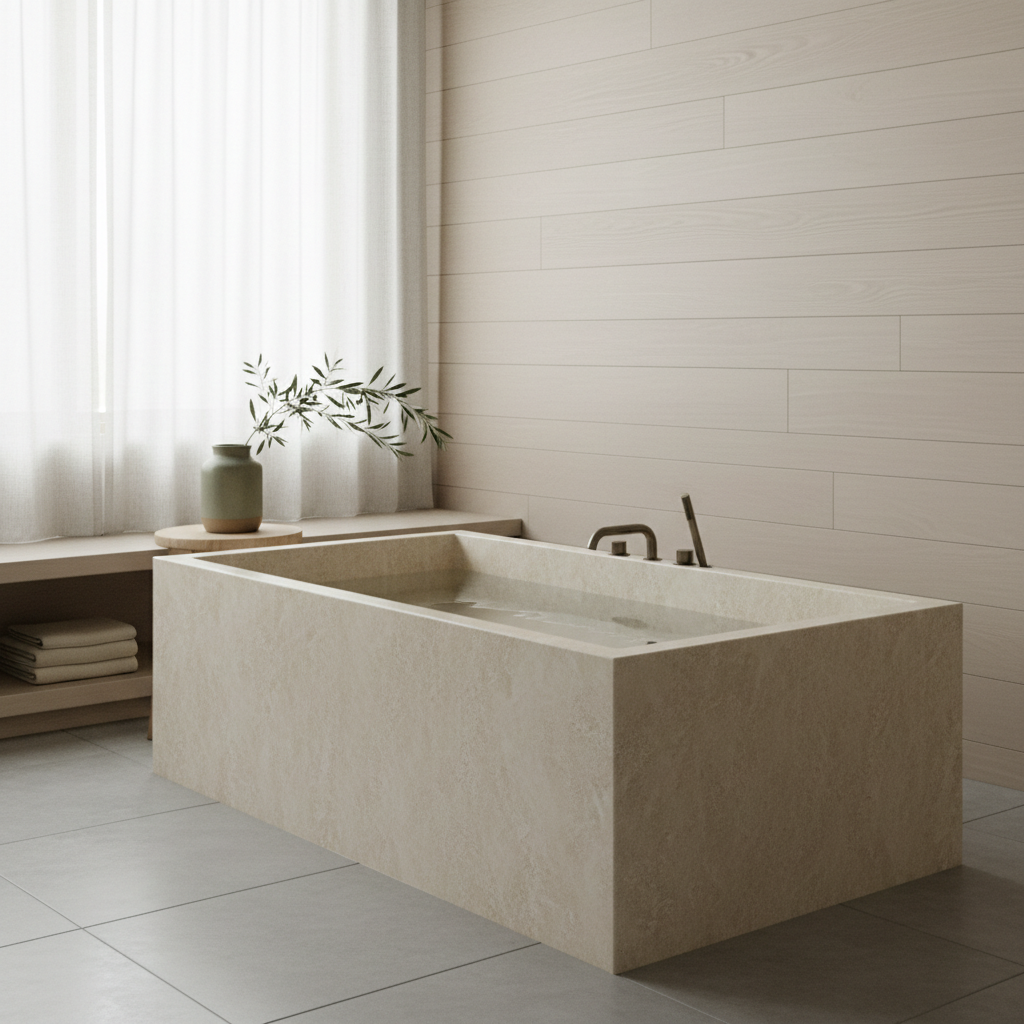
The modern house is often a declaration of independence from the natural world. It is a sealed box, its orientation dictated by the geometry of a street grid rather than the arc of the sun. We have spent the better part of a century perfecting this illusion of control, mastering the art of mechanical heating, cooling, and lighting.
The result is a subtle but persistent disconnection. We wake in darkness, work under the flat, unchanging glare of artificial lamps, and return home to spaces that require yet more technology to feel comfortable. We have insulated ourselves from the rhythms of the day, and in doing so, have created a need for technologies that promise to restore our well-being.
There is, however, an older and quieter wisdom. It proposes that a house should not be a fortress against the environment, but a participant within it. This school of thought begins with a simple observation of the sun, designing a home not as a static object, but as an instrument for living in dialogue with the sky.
The house becomes a clock, marking the day's passage not with ticking hands but with moving light.
The principles are straightforward. A kitchen and breakfast room face east, capturing the low, optimistic light of the morning. Living spaces are oriented toward the south and west, where they can gather the warmth and energy of the afternoon and evening. Bedrooms, used primarily in darkness, can occupy the cooler northern side.
A Dialogue with Light
This approach, sometimes called heliotropic design, is less concerned with the metrics of energy efficiency—though it is a natural consequence—and more interested in the quality of a life lived indoors. It treats sunlight not as a resource to be managed, but as an essential nutrient.
Its benefits are physiological. Exposure to the shifting spectrum of natural light throughout the day has a profound effect on our circadian rhythms, which in turn regulate sleep, mood, and alertness. It is a passive form of wellness, written into the very architecture of the home.
The effect is a home that breathes. It feels alive and responsive, a quiet partner in the rituals of daily existence. The first light that crosses a kitchen counter is an invitation. The warm afternoon glow in a sitting room is a call to rest. The slow fade of dusk in a study encourages a gentle conclusion to the day.
This sensibility is not new. One finds its logic in the sun-baked walls of vernacular farmhouses in Greece and the deep-set windows of Italian villas—structures built from an intuitive understanding of place. They are a reminder that the most sophisticated home is not the one with the most complex systems, but the one that needs them the least.
Further reflections on the wellness house, with original plates and a directory from Across Europe, are collected in Edition V of our journal.
The longer reading lives in the magazine.
This essay is one observation. Edition V carries the plates, the studies and the directory of Across Europe — thirty pages, on uncoated stock, posted across Europe.
Continue reading
All essays → Editorial · 8 min
What a house is worth, and what it costs
On the difference between price and value, and why we have stopped using the first to describe the second.
 Markets · 11 min
The quiet market
Why the most interesting European homes are no longer listed, and what that means for the people looking for them.