The House That Sleeps
In the south of Spain, the quietest hours of the afternoon are a lesson in architecture and stillness.
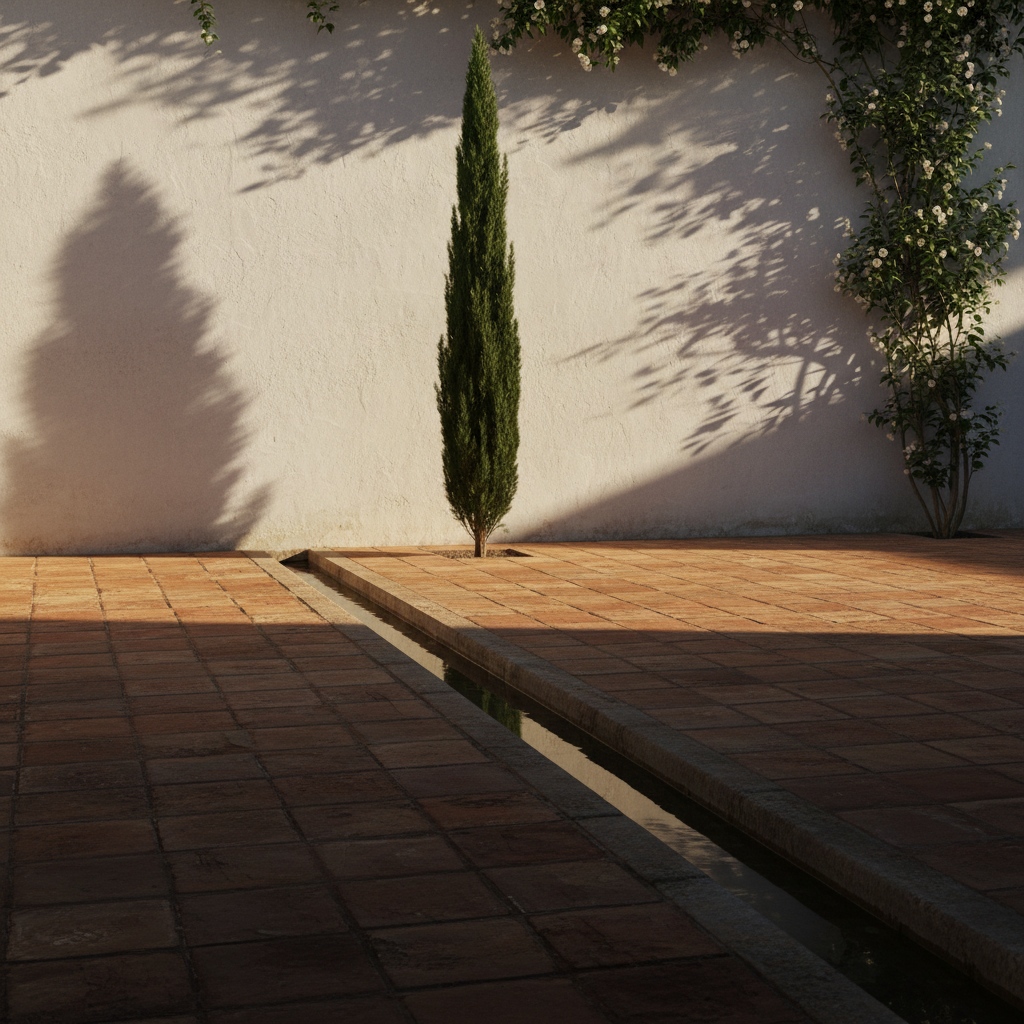
The world runs on a consensus of open hours. We expect the grocer to be open at noon, the tailor at one, the notary at two. It is a modern sensibility, born of the northern cities that drafted the blueprints of a global economy. In these places, the day is a single, uninterrupted arc of work and commerce, a steady hum from morning until the five o’clock closing bell.
But to travel south is to find a different rhythm. In Andalusía, the day is broken in two. The hours after lunch are not for errands. They are a pause, a pocket of deep quiet that settles over town and country alike. Shutters are drawn. Doors are closed. The streets empty, and for a few hours, the world of commerce simply ceases to exist.
To the visitor, it can feel like an inconvenience. We arrive in a white-walled town, ready to explore, only to find it silent, shuttered, and still. The heat is a physical presence, shimmering on the cobblestones. The only sounds are the buzz of a stray cicada or the distant chime of a forgotten clock. The town, like its inhabitants, has gone to sleep.
To let a house breathe is to understand that it, too, needs to rest.
This is not laziness, but a profound wisdom. It is an architecture of time, not just of space. The southern house is designed for this daily ritual. Its thick walls, inherited from the Romans and the Moors, are built to absorb the morning sun and then hold the cool of the earth through the blaze of the afternoon.
The central courtyard, the patio, is the home’s shaded lung. Here, a fountain might trickle, the sound of water a balm in the dry air. Plants—jasmine, bougainvillea, geraniums—climb the walls, their leaves a tapestry of green against the whitewash. The air is cool, still, and fragrant. This is the heart of the house, and in the sleeping hours, it is a sanctuary.
An Architecture of Retreat
The act of closing the house is a deliberate one. It is a closing of the self to the harshness of the world outside and a turning inward. The home becomes a refuge not just from the heat, but from the demands of the day. Life retreats to the cool, dim rooms that radiate from the patio.
Here, time slows. The frantic pace of the morning gives way to a gentle lethargy. It is a time for quiet conversation, for a book, for a shared meal that lingers long after the plates are cleared. It is a time when the house is most itself, when it fulfills its highest purpose: to shelter, to comfort, to hold.
This afternoon caesura is a tradition of deep respect. It is a respect for the power of the sun, a force that cannot be ignored. It is a respect for the body, which needs reprieve. And it is a respect for the home as more than just a container for living, but as an active participant in the rhythm of life.
When the sun begins to soften and the shadows lengthen, the town wakes. Shutters are thrown open. Doors unlatch. The murmur of life returns to the streets as people emerge, refreshed, into the golden light of the evening. The day begins anew.
The longer reading on the vernacular architecture of southern Spain, with plates and a directory of Andalusía, lives in Edition II of the magazine.
The longer reading lives in the magazine.
This essay is one observation. Edition II carries the plates, the studies and the directory of Andalusía, Spain — thirty pages, on uncoated stock, posted across Europe.
Continue reading
All essays → Editorial · 8 min
What a house is worth, and what it costs
On the difference between price and value, and why we have stopped using the first to describe the second.
 Markets · 11 min
The quiet market
Why the most interesting European homes are no longer listed, and what that means for the people looking for them.