The House Turned From The Wind
In Provence, the defining architectural feature is not what is built, but what is built against: a persistent, seasonal wind.
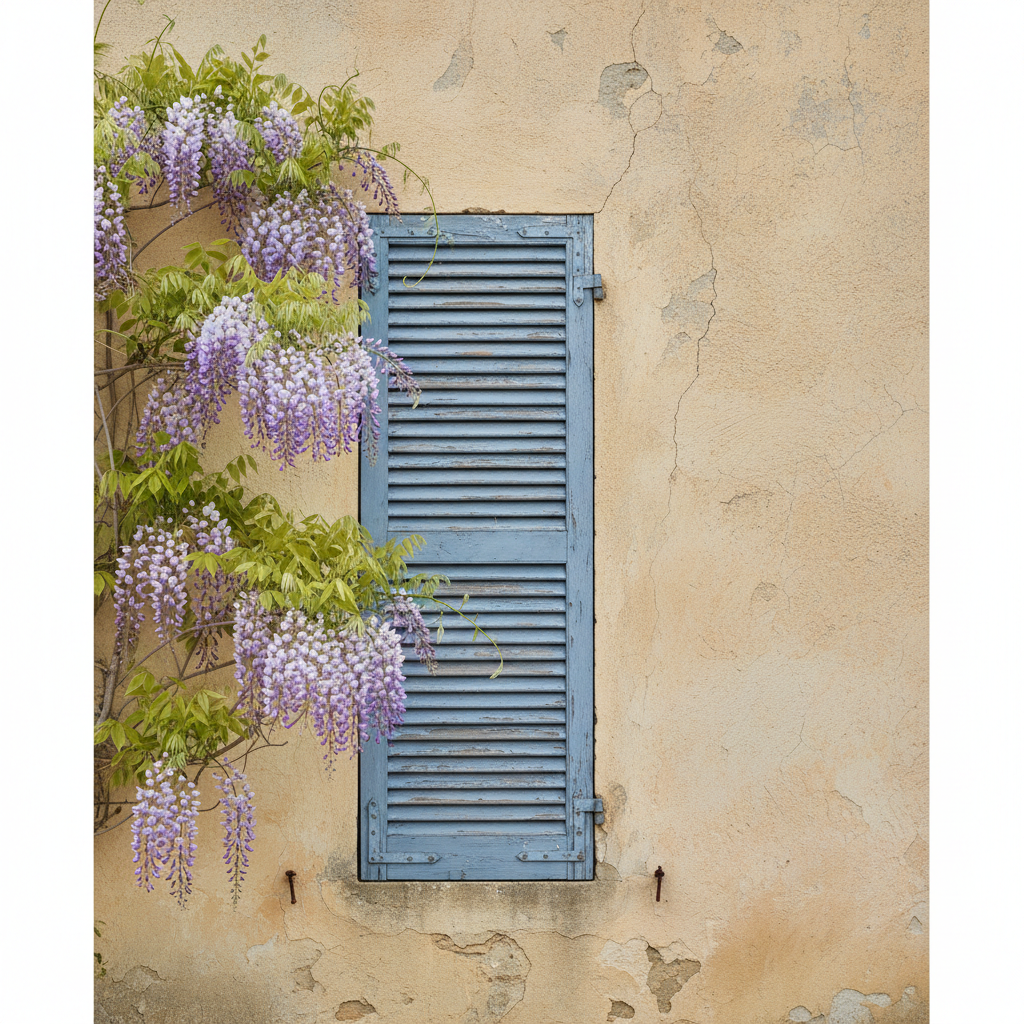
To think of a house in Provence is to conjure an aesthetic of simple beauty. One imagines walls of sun-bleached stone or ochre-hued stucco, tiled roofs faded to the colour of dried clay, and blue-painted shutters set against a landscape of lavender and olive groves. It is an architecture of profound peace, seemingly born only of light and warmth.
Yet, the region’s vernacular is shaped by a force less gentle than the sun. It is a design language forged in opposition to an invisible, often relentless element: the Mistral. This wind, which sweeps down the Rhône corridor from the north, is a defining feature of the Provençal climate, and by extension, its architecture.
The Mistral is not a mere breeze. It is a character in the story of the place, arriving with a dry, cool insistence, most notably in the late winter and spring. It can blow for days on end, a steady and powerful force that rattles loose tiles, chills the air, and bends the cypress trees that famously serve as windbreaks throughout the countryside.
The traditional Provençal farmhouse, or *mas*, is built in direct response. Its fundamental design principle is one of defense. The primary, and most telling, feature is its orientation. Almost without exception, the back of the house faces north, presenting a stern, nearly featureless facade to the direction from which the Mistral arrives.
This northern wall is often a solid expanse of stone with few, if any, openings. It is a shield, turning a cold shoulder to the wind’s onslaught. The main entrance, the terrace, the large windows that welcome the light—all are typically situated on the southern side, in the lee of the wind. To live in such a house is to live in the shelter the building itself creates.
An Architecture of Necessity
The roof, too, is a product of this meteorological reality. Pitches are characteristically low, presenting less surface area for the wind to lift. The iconic canal tiles, or *tuiles canal*, are heavy and laid in an overlapping pattern, often secured with mortar at the edges to prevent them from being stripped away during a gale.
The Provençal house does not fight the wind; it reasons with it, turning a stone shoulder to the north so that it may open its heart to the south.
Even the celebrated shutters serve a purpose beyond their charm. While they provide shade from the summer sun, they are also bolted shut against the force of the wind, protecting the glass and sealing the interior from drafts and the incessant whistling that the Mistral can produce.
This dialogue between structure and climate creates a specific rhythm to domestic life. The southern-facing terrace becomes the true heart of the home, a protected space for outdoor living. The garden is planted in its shelter. Life unfolds in the calm pocket of air the house cultivates, while the wind streams past, unheard and unfelt.
There is a quiet wisdom in this design. It is an architecture born not of a single artistic vision, but of generations of observation and adaptation. Each element is a lesson learned, a response to the enduring character of the place. The house is not an object imposed upon the landscape, but a participant in its elemental dramas.
In this, the Provençal home stands as a testament to the idea that the most elegant design solutions are often the most practical. It finds its beauty not in ornamentation, but in its graceful and intelligent submission to the forces of nature.
The longer reading lives in the magazine.
This essay is one observation. Edition IV carries the plates, the studies and the directory of Provence, France — thirty pages, on uncoated stock, posted across Europe.
Continue reading
All essays → Editorial · 8 min
What a house is worth, and what it costs
On the difference between price and value, and why we have stopped using the first to describe the second.
 Markets · 11 min
The quiet market
Why the most interesting European homes are no longer listed, and what that means for the people looking for them.