The Kitchen Is a Hearth, Not a Showroom
In Alentejo, Portugal, the kitchen remains the unadorned, functional heart of the home—a space for living, not for looking.
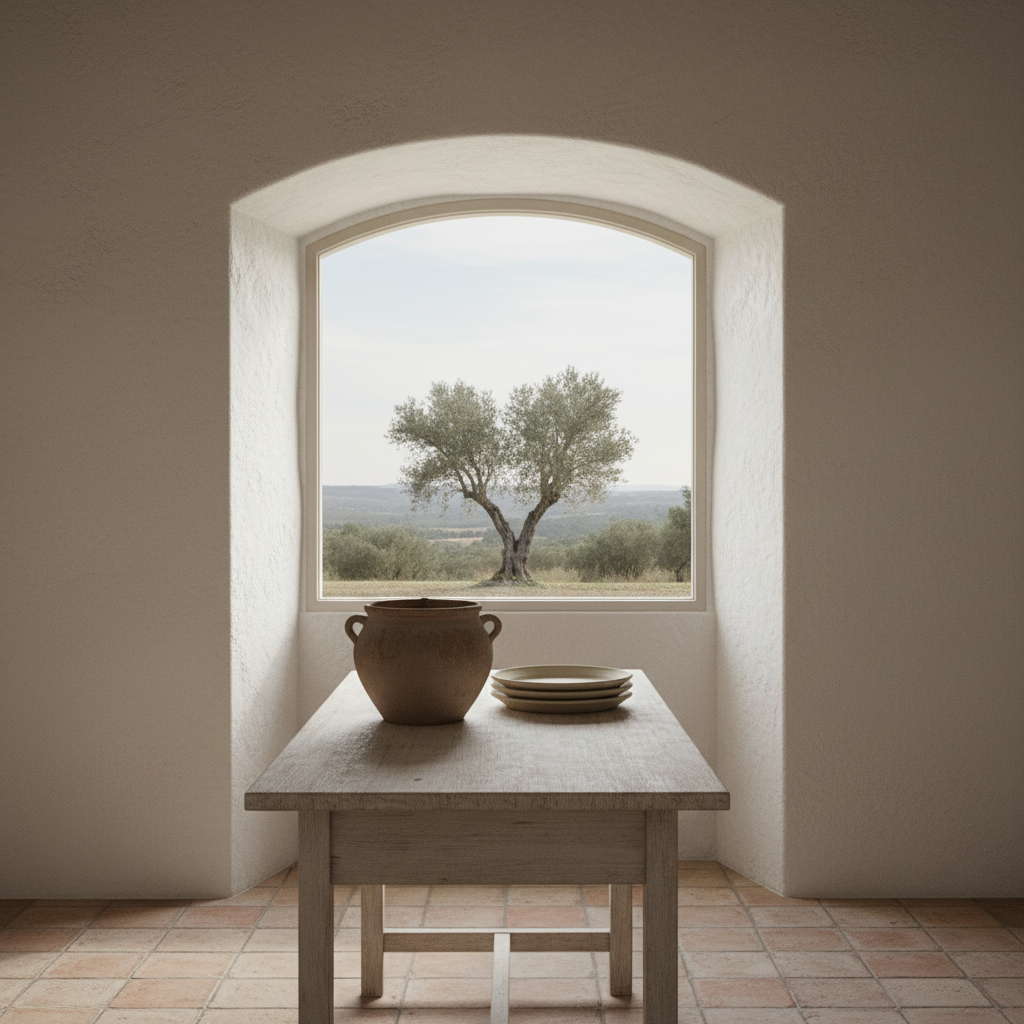
The modern kitchen is often a study in performance. It is a stage for culinary ambition, a showroom of polished surfaces and professional-grade appliances that are rarely used to their full potential. It is designed to be seen, a landscape of marble islands and sculptural faucets that speak more to aspiration than to daily life. This kitchen is a destination, a room one arrives in to cook, and then leaves. It is a world away from the kitchens of Alentejo.
In the low, rolling plains of southern Portugal, the kitchen is not a room one enters and exits. It is the center of the home’s gravity. It is a place of constant, quiet activity, a hearth that radiates warmth and sustenance throughout the house. It is less a laboratory for gastronomy and more a simple, durable workshop for the business of living. There is no pretense here. There is only utility.
The air is different. It carries the scent of woodsmoke from the hearth, of garlic sizzling in olive oil, of bread baking in a wood-fired oven. The sounds are those of use: the scrape of a wooden spoon against a clay pot, the rhythmic chop of vegetables on a worn cutting board, the low murmur of conversation. These are the foundational elements of a home, and in Alentejo, they live in the kitchen.
It is a room shaped by generations of necessity, not by the pages of a design magazine. Its beauty is an unintended consequence of its purpose. The floor is often paved with rustic terracotta tiles, cool underfoot in the summer and forgiving of spills. The walls are thick and whitewashed with lime, reflecting the soft, clear light. Furniture is sparse and functional—a sturdy wooden table, a few simple chairs, open shelves holding earthenware bowls and everyday glasses.
The Alentejo kitchen is a testament to the fact that a room’s true beauty is a consequence of its utility.
This space is not designed for entertainment in the modern sense. It is not built to impress guests. It is built for the family that lives within its walls. The table is not just for eating; it is for mending clothes, for children’s homework, for sorting olives, for conversations that last late into the evening. It is the most honest table in the house.
The Unornamented Room
There is a notable absence of ornament. The focus is on materials that endure. Copper pots hang from a rack, their surfaces glowing with the patina of age and countless polishings. Baskets woven from local grasses hold eggs or vegetables. Everything has a purpose, and everything is within reach. This is the logic of the workshop, where efficiency and ease are paramount. The result is a space that feels settled, calm, and deeply human.
This philosophy stands in quiet opposition to the prevailing trend of the kitchen as a disposable set of trends. In Alentejo, a kitchen is not remodeled every decade. It evolves slowly, absorbing the marks and stories of the lives lived within it. A crack in a tile, a scorch mark on the wooden countertop—these are not imperfections to be erased but records of a shared history.
It serves as a reminder that a home is not an art gallery. Its purpose is not to be looked at but to be lived in. The pursuit of perfection can often lead to spaces that are sterile and unwelcoming, rooms that reject the beautiful mess of daily life. The Alentejo kitchen, in its profound simplicity, makes a case for a different way of thinking. It suggests that the best rooms are the ones that ask nothing of us but to be used.
Our full study of the Alentejo home, with accompanying plates and a directory, is available in Edition I of the journal.
The longer reading lives in the magazine.
This essay is one observation. Edition I carries the plates, the studies and the directory of Alentejo, Portugal — thirty pages, on uncoated stock, posted across Europe.
Continue reading
All essays → Editorial · 8 min
What a house is worth, and what it costs
On the difference between price and value, and why we have stopped using the first to describe the second.
 Markets · 11 min
The quiet market
Why the most interesting European homes are no longer listed, and what that means for the people looking for them.