The Landscape as a Protected Work
To visit a place like Tuscany is to witness a landscape that has been deliberately and carefully preserved.
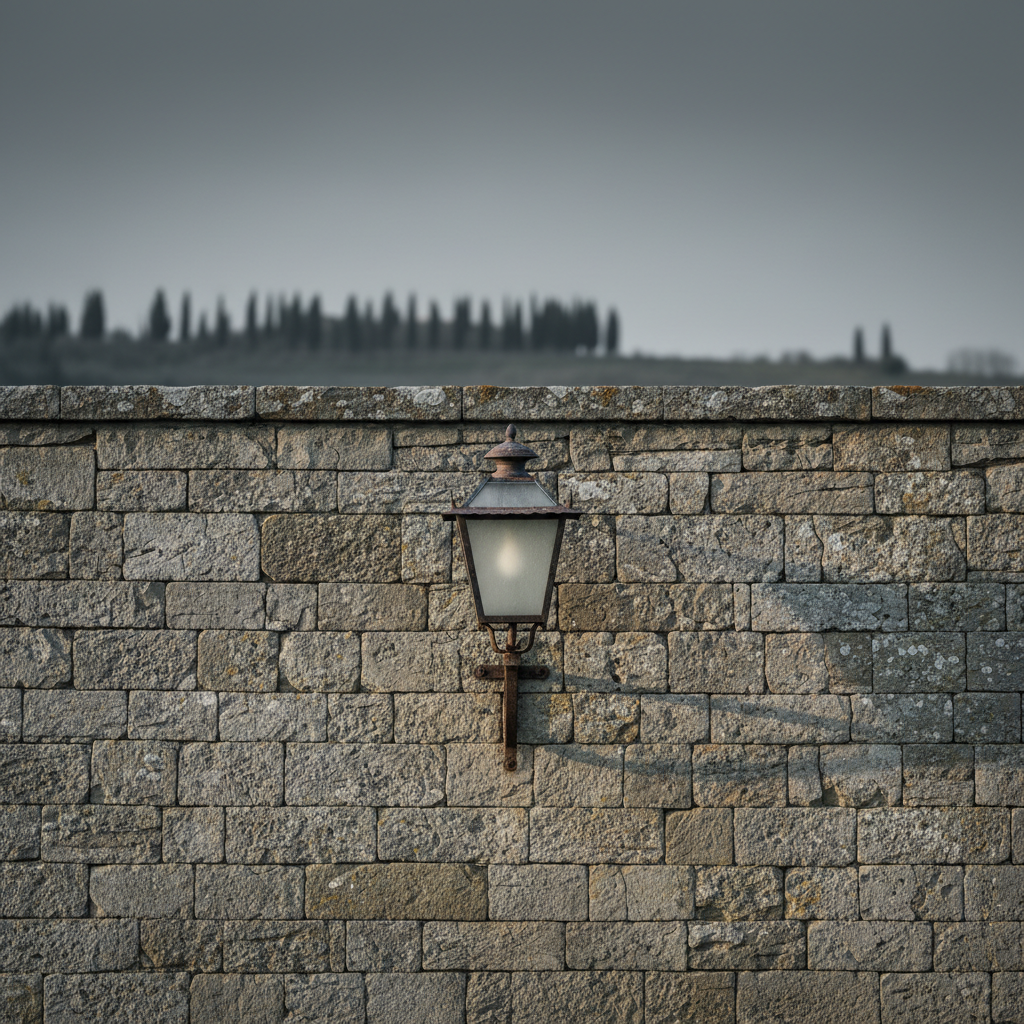
Tuscany, seen from a high road in winter, can feel like a landscape outside of time. The low sun catches the frost on the fields, and the hills of the Val d’Orcia recede into a soft, grey haze. There is a sense that the valley, with its winding roads lined by cypress trees and its stone farmhouses waiting patiently on the crests, has always looked this way. This is, of course, an illusion.
This enduring quality is not an accident, nor is it a simple matter of a place being old. It is the result of a conscious and deeply considered act of preservation. Much of this region is a UNESCO World Heritage site, a designation that is often understood as a simple acknowledgment of beauty. But it is something more complex.
The protection afforded by UNESCO is not meant to freeze a landscape in amber. The goal is not to create an open-air museum where life ceases. Rather, it is to safeguard what the organization calls “outstanding universal value.” In the case of the Val d’Orcia, this value lies in the landscape itself—a landscape that has been shaped by human hands for centuries, and which represents a model of Renaissance agricultural and aesthetic ideals.
The land is treated as a document of a particular way of life, one written in soil and stone.
The fields, the farmhouses, the roads, and the avenues of trees are all paragraphs in a long story about the relationship between people and their environment. UNESCO protection, then, is a commitment to ensure that this story remains legible. It is an act of cultural conservation on a territorial scale.
The Unchanging House
This philosophy extends to the built environment within the protected zone. To own and restore a house in such a place is to enter into a dialogue with this history. The regulations governing renovation and construction are famously strict. They are not in place to frustrate the ambitions of homeowners, but to maintain the integrity of the whole.
A façade cannot be painted an arbitrary color, a window cannot be moved, and a modern extension cannot be casually appended. Every decision is weighed against its potential impact on the character of the cultural landscape. The house is not seen as an isolated object upon which an owner can impose their will, but as a constituent part of a larger composition. Its materials, its form, and its placement are all part of the story.
This requires a particular kind of patience from the inhabitants, a willingness to subordinate personal whim to a collective, historical narrative. It fosters an architecture of continuity, where change happens slowly and in careful conversation with what already exists. The stone wall, weathered over centuries, becomes the measure of any new intervention.
The result is a place that feels coherent and whole, where the buildings seem to belong to the land as much as the trees do. It is a quiet rejection of the modern impulse to tear down and begin anew, proposing instead a model of stewardship.
This approach ensures the landscape remains a living document of a particular aesthetic and agricultural tradition. It is a form of managed evolution, not stagnation, where the past is not a constraint but a guide.
The deeper study of this enduring landscape, with archival plates and a directory of the region, can be found in Edition III of our journal.
The longer reading lives in the magazine.
This essay is one observation. Edition III carries the plates, the studies and the directory of Tuscany, Italy — thirty pages, on uncoated stock, posted across Europe.
Continue reading
All essays → Editorial · 8 min
What a house is worth, and what it costs
On the difference between price and value, and why we have stopped using the first to describe the second.
 Markets · 11 min
The quiet market
Why the most interesting European homes are no longer listed, and what that means for the people looking for them.