The Long Calculus of Stone
To build for a thousand years required a different understanding of time, technology, and the purpose of place.
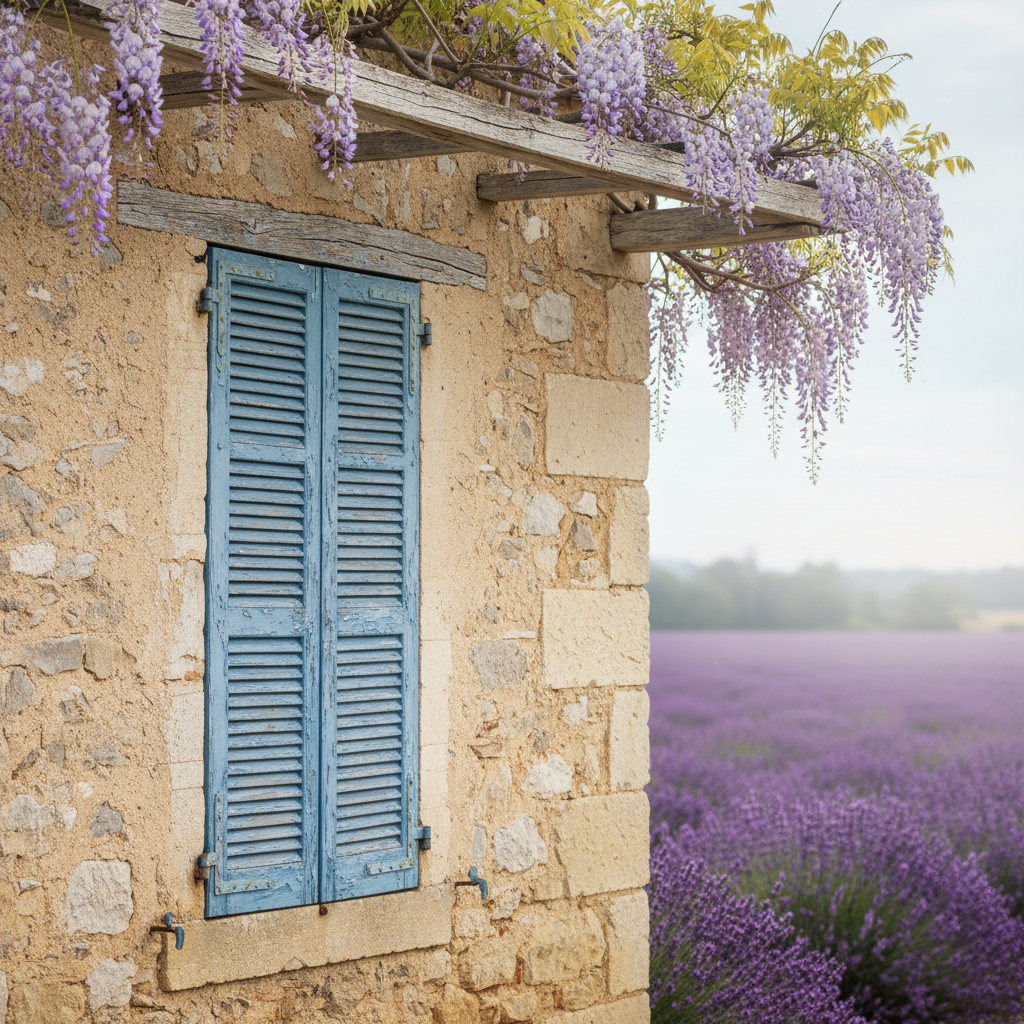
Provence exists in a state of deep time. The region’s character is not a product of one era, but a palimpsest of many, where the Roman line is the firmest and most enduring basis. To travel its roads is to feel the presence of a substratum of history that is not so much buried as it is foundational, holding up everything that has come since.
To encounter the Roman world here is not an academic exercise. In Arles, a first-century amphitheater still holds summer concerts. In Nîmes, the Maison Carrée stands as a near-perfect temple, its form influencing civic architecture for two millennia. These are not delicate ruins cordoned off from life, but integrated structures that have proven their utility across ages.
The grand monuments draw the eye, but the true genius of the Roman project in Gaul was its quiet, connective infrastructure. The stone-paved roads that first stitched the province together still trace the paths of modern highways. Aqueducts, like the magnificent Pont du Gard, mastered the landscape through the simple, persistent application of gravity and grace.
This was engineering as a statement of political and cultural intent. The Romans built to project stability across a vast and varied empire. Their constructions were a physical manifestation of an idea: that Rome was not a fleeting power, but an eternal one, capable of shaping the natural world to its will.
To build for a thousand years is to accept a certain humility about one’s own brief moment.
The effort was a declaration of confidence in the future. It required a profound belief that the civilization undertaking such projects would endure long enough to reap their benefits. This long-term thinking is embedded in the very mortar of the remaining structures, a silent communication from their builders.
The Material and the Message
The method was as important as the motive. Roman engineers used local limestone, cut with formidable precision, and a form of concrete that grew stronger with exposure to the elements. The materials were of the place, but the vision was for the ages. Every arch was a calculation of force and endurance, a marriage of mathematics and matter.
This calculus of longevity sits in stark contrast to our own. Contemporary building practices are often governed by depreciation schedules and five-year plans. We build for rapid assembly and immediate return, choosing materials for their short-term cost-effectiveness rather than their ability to withstand a millennium of seasons.
The structures that remain are therefore more than historical curiosities. They are a quiet but persistent rebuke to our disposable culture, a testament to a time when permanence was the highest value in civic life. They teach a long lesson in the responsibilities of making, and the virtue of a patient hand.
Looking at a Roman wall in Provence is like looking through a window into a different mindset. It is a view onto a world that, for all its faults, understood its own place in a much longer timeline. It saw itself not as the end of history, but as a single, durable link in a chain reaching backward and forward.
Further reflections on the permanence of place, with original plates and a directory of Provence, France, are available in Edition IV of our journal.
The longer reading lives in the magazine.
This essay is one observation. Edition IV carries the plates, the studies and the directory of Provence, France — thirty pages, on uncoated stock, posted across Europe.
Continue reading
All essays → Editorial · 8 min
What a house is worth, and what it costs
On the difference between price and value, and why we have stopped using the first to describe the second.
 Markets · 11 min
The quiet market
Why the most interesting European homes are no longer listed, and what that means for the people looking for them.