The Nine-Year Rhythm of the Land
In the cork forests of Alentejo, a patient harvest cycle teaches a quieter, more enduring form of ownership.
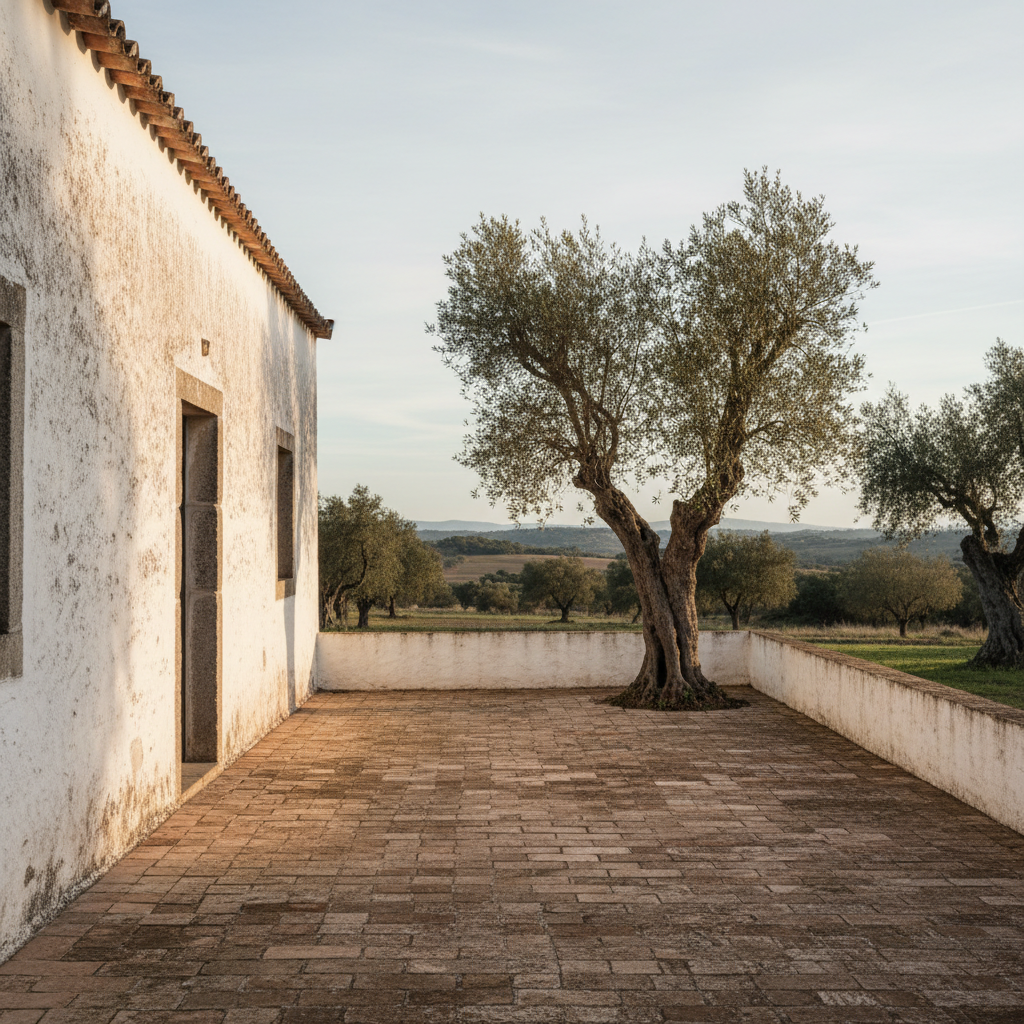
In the rolling plains of Alentejo, time is measured differently. The days are marked by the slow transit of the sun across a vast sky, and the years are counted not in hurried succession, but in deliberate, patient cycles. Here, the landscape is defined by the *montado*, a managed forest of cork oaks that has shaped the region’s economy, culture, and its quiet philosophy of ownership for centuries.
The protagonist of this landscape is the cork oak, or *sobreiro*. Every nine years, it is ready for a harvest. This is not a felling, but a careful undressing. A skilled worker, using a traditional axe, cuts and peels away the thick, valuable bark in large planks. The tree is unharmed. Once the harvest is complete, the year is painted on the exposed trunk—a single digit marking the end of the calendar year. A ‘4’ signifies a harvest in 2024, a pact with the future.
And then, the wait begins. For nine years, the tree is left to its own devices, slowly regenerating its protective layer under the patient Alentejo sun. It is a period of quiet growth, invisible to the impatient eye. This cycle is a profound teacher. It offers a lesson in a world rushing toward immediate returns: that the most valuable things often require the longest wait.
To own land here is to enter into this same pact. The nine-year rhythm of the cork harvest imbues the local understanding of property with a sense of immense patience. It suggests that a home is not a project to be completed, nor an asset to be flipped, but a living entity to be tended over a long and quiet horizon.
To own a house here, especially one surrounded by the montado, is to submit to a slower clock.
This cadence stands in stark opposition to the modern ethos of perpetual renovation and immediate gratification. It proposes that the truest value of a place is not unlocked through frantic activity, but through quiet observation and a deep understanding of its natural rhythms. The land is not a canvas for ambition, but a partner in a slow dance.
A Different Cadence
This philosophy finds its expression in the region’s architecture. The simple, whitewashed farmhouses—known as *montes alentejanos*—are built not for passing trends, but for permanence. Their thick walls, often made of rammed earth or stone, are designed to mediate the climate, keeping interiors cool in the punishing summer and warm in the damp winter. These are not loud structures; they are quiet participants in the landscape.
Materials are honest and local: terracotta tiles underfoot, lime-wash on the walls, and heavy wooden beams overhead. There is a notable lack of artifice. A home is kept, not perfected. Its imperfections are not flaws to be corrected, but records of its life, testaments to the passage of time and the gentle hand of its inhabitants.
The result is a sense of profound calm. The home does not demand constant attention or endless improvement. It asks only for stewardship. The owner becomes less of a proprietor and more of a caretaker, another link in a long chain of guardianship. The goal is not to impose one’s will upon the house, but to live in harmony with it, to allow its rhythms to shape your own.
The slow patience of the cork oak becomes the patience of the homeowner. One learns to appreciate the subtle shifts of the seasons, the gradual aging of wood and stone, and the quiet satisfaction of a house that is simply, and beautifully, enough.
The essays, plates, and a directory of resources for Alentejo, Portugal, are collected in Edition I of the magazine.
The longer reading lives in the magazine.
This essay is one observation. Edition I carries the plates, the studies and the directory of Alentejo, Portugal — thirty pages, on uncoated stock, posted across Europe.
Continue reading
All essays → Editorial · 8 min
What a house is worth, and what it costs
On the difference between price and value, and why we have stopped using the first to describe the second.
 Markets · 11 min
The quiet market
Why the most interesting European homes are no longer listed, and what that means for the people looking for them.