The Olive at the Door
Our focus on a home’s grand gestures often overlooks the small, living details that truly define its character and welcome.
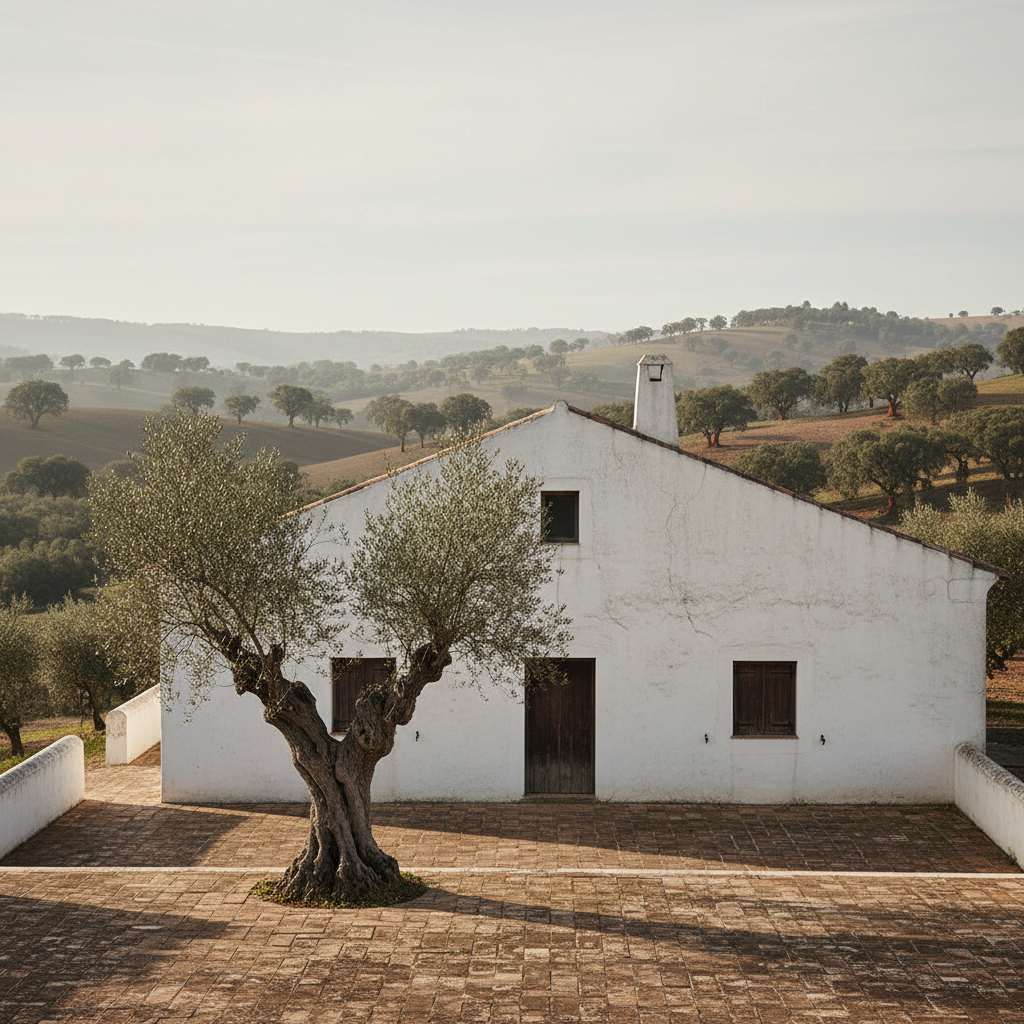
In the language of real estate, the term ‘elevation’ refers to a home’s presence. It is the face it presents to the world, the architectural statement drawn and built for the view from the street. We have become preoccupied with this view, assessing a house by its formal composition, its rooflines, its fenestration. It is an appraisal of the static, a judgment on a fixed and finished thing.
There is, however, another measure of a home’s welcome, one found not in the grand design but in the small gesture. Consider the single olive tree planted by the door. This is not an architectural feature. It is a living element, a quiet participant in the life of the house. It offers a different kind of greeting, one that shifts with the light and the season.
An elevation announces its intent once. It is a declaration of taste, of budget, of period. The tree, by contrast, is a conversation. In spring, it offers new growth. In summer, its leaves provide a measure of shade, dappling the light on a whitewashed wall. In autumn, it may offer its fruit. It asks for water; it endures the heat; it grows, almost imperceptibly, alongside the inhabitants.
An elevation announces itself once. A tree by the door offers a new greeting with every season.
In the southern plains of Alentejo, Portugal, this is a lesson understood. The landscape is one of rolling hills, cork oaks, and a severe, powerful sun. The traditional farmhouses, or ‘montes,’ are not exercises in architectural bravado. They are responses to the climate and the land—built with thick walls, small windows, and tiled roofs. Their beauty lies not in ornament, but in form and function.
The Measure of a Home
What is the proper measure of a home? We are accustomed to speaking in square meters, in market comparables, in renovation costs. These are the metrics of the transaction. They are necessary, but they are insufficient. They do not account for the quality of the light in a room, the sound of a breeze through the leaves of a tree, or the feeling of turning a key in a lock.
The presence of a living thing, deliberately placed and tended, speaks to a different set of values. It suggests patience. An olive tree does not reach maturity in a season. It is an investment in the future, a gesture of faith in the soil and the place. It speaks to an understanding that a home is not merely an asset to be leveraged, but a space to be inhabited, slowly and with intention.
This is not an idea confined to the Portuguese countryside. It is a universal principle. It can be found in the climbing rose on an English cottage, the carefully raked gravel of a Kyoto garden, or the single pot of basil on a city fire escape. It is the human impulse to cultivate, to bring life to the inert materials of construction.
To tend to a plant is to engage in a rhythm outside of our own. It marks the passage of time. A tree by the door is a quiet reminder of this connection, a counterpoint to the digital and the ephemeral. It is an anchor, rooting a structure to its specific patch of earth.
The market will always value the spectacular. It is drawn to the new, the grand, the renovated. But the enduring quality of a place, the sense of it as a home, is often found in these quieter, living details. They are the elements that transform a property into a place of belonging.
The longer reading on this subject, with photography and a directory of Alentejo, Portugal, is available in Edition I of our journal.
The longer reading lives in the magazine.
This essay is one observation. Edition I carries the plates, the studies and the directory of Alentejo, Portugal — thirty pages, on uncoated stock, posted across Europe.
Continue reading
All essays → Editorial · 8 min
What a house is worth, and what it costs
On the difference between price and value, and why we have stopped using the first to describe the second.
 Markets · 11 min
The quiet market
Why the most interesting European homes are no longer listed, and what that means for the people looking for them.