The Patience of a Forty-Year Wall
A new structure in the Tuscan countryside is an exercise in patience, taking decades to truly belong to the landscape.
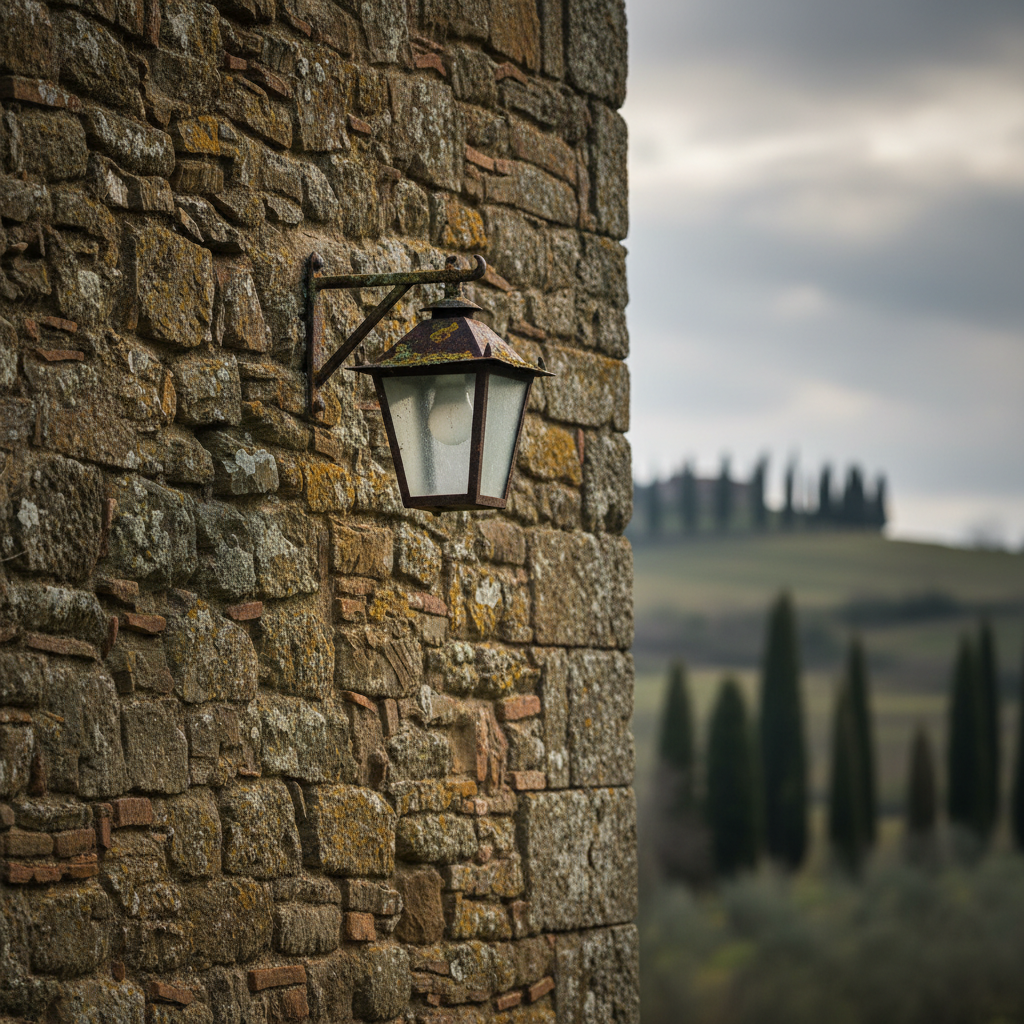
To build a stone wall in the Tuscan countryside is to place a wound upon the landscape. The earth is scarred, the stones are too clean, and the mortar is whiter than bone. It stands in defiance of the hills, a sharp, geometric intrusion. It does not belong.
We see it as an error. Our eye, accustomed to the ancient and the weathered, registers its clean lines as a mistake. The wall seems to shout its newness. It lacks the quiet dignity of the low, crumbling walls that line the old farm tracks—those structures that have become habitats for moss, lizard, and shadow.
The modern mason, using much the same tools as his ancestors, does not see it this way. He is not building a finished object. He is starting a process. The wall is an invitation to time, a substrate for weather. He has selected stones not only for their fit, but for their ability to erode, to stain, and to host life.
It is a difficult thing to accept. For its first decade, the wall is an adolescent, awkward and out of place. Rain washes the quarry dust from its face, but the stones remain bright, their colors distinct. For the next thirty, it slowly begins to settle. The sharp edges of the mortar begin to soften. The world is a patient artist.
A wall in Tuscany is not built, but begun.
The first colonies of lichen appear as faint, grey-green circles. They are pioneers on a vast, rocky continent. They begin the slow work of breaking the stone down, of creating purchase for other, more complex life. Winter rains trace dark paths down the face of the wall, and summer sun bleaches them away, a seasonal rhythm of staining and cleansing.
The Slow Work of Belonging
After forty years, something remarkable happens. The wall is no longer new. It has acquired a patina. The stones have absorbed the colors of the earth, the sky, and the seasons. The mortar joints are no longer stark, but have receded, creating deeper shadows and a more complex texture.
It has taken a human lifetime for the wall to begin its true life. It no longer feels like an imposition. It has been absorbed by the landscape it once interrupted. The cypresses planted near it have grown tall, their roots now intertwined with its foundation. It has become part of the story of the place.
This is the patience of stone. It is a rebuke to our hurry, to our desire for finished things. An object that is born complete can only degrade. But an object that is born to age, to collaborate with the elements, accrues character over centuries. It becomes richer, more complex, and more beautiful.
The wall that looked wrong for forty years will look right for the next four hundred. Its purpose was not to be a perfect object in the present, but to become a timeless feature of the future landscape. This same philosophy applies to the farmhouse, the terrace, and the lane.
A deeper consideration of patina, with plates from the region and a directory of Tuscan masonry, can be found in Edition III of the magazine.
The longer reading lives in the magazine.
This essay is one observation. Edition III carries the plates, the studies and the directory of Tuscany, Italy — thirty pages, on uncoated stock, posted across Europe.
Continue reading
All essays → Editorial · 8 min
What a house is worth, and what it costs
On the difference between price and value, and why we have stopped using the first to describe the second.
 Markets · 11 min
The quiet market
Why the most interesting European homes are no longer listed, and what that means for the people looking for them.