The Roman Standard in Provence
In Provence, the enduring presence of Roman engineering offers a quiet lesson in how to build for a thousand years.
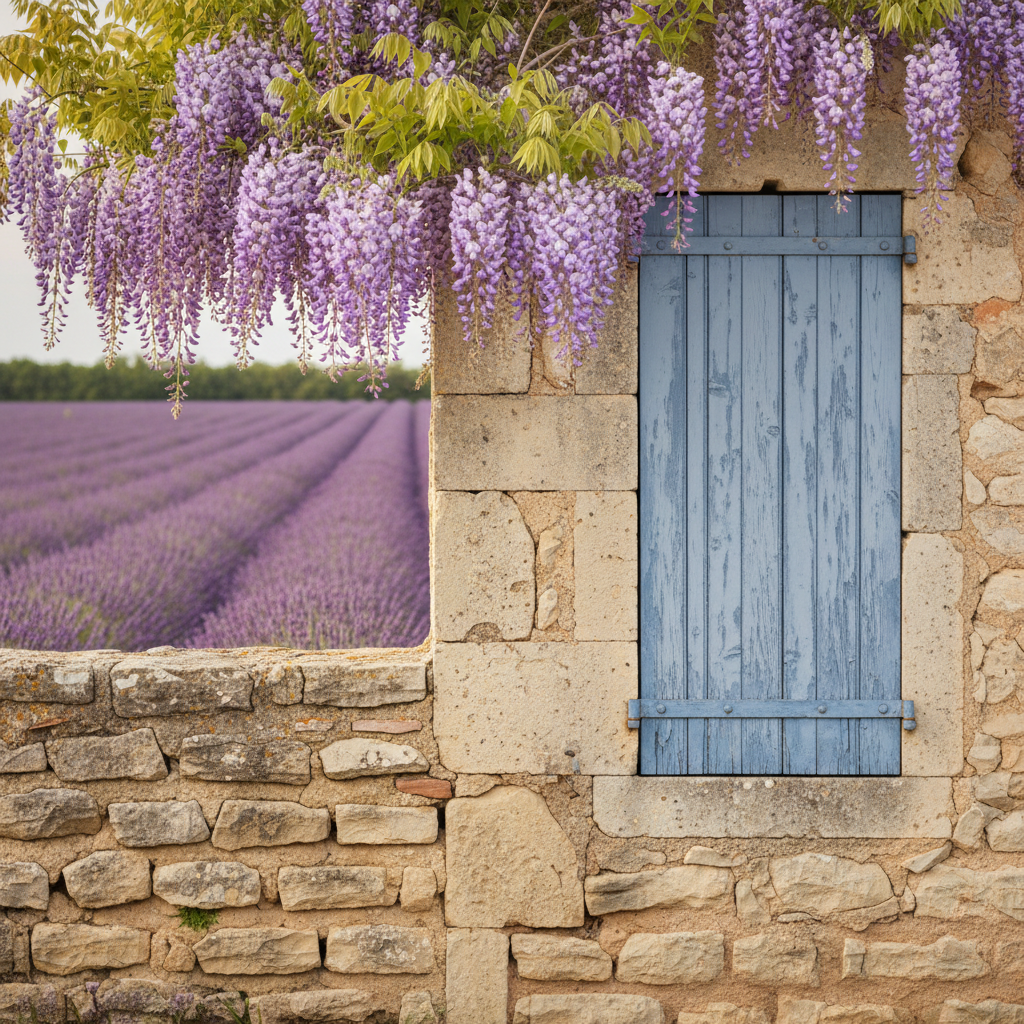
To stand in Provence is to stand in several centuries at once. The sunlight that falls on the vineyards is the same that once fell on the Roman masons who shaped this landscape two millennia ago. Their work remains, not as a collection of ruins, but as a quiet, functional part of the scenery. An arch, an arena, a length of road—these are not monuments to a dead empire, but a living infrastructure woven into the fabric of the present.
One feels this most acutely before the Pont du Gard, the aqueduct that crosses the Gardon River. It is a thing of impossible grace and utility. For centuries, it carried water to the city of Nîmes, its gentle gradient a triumph of mathematics and sheer will. It was built to serve a purpose, but also to express an idea: that the Roman world was one of order, permanence, and technical mastery.
The local limestone, cut and placed without mortar for much of its height, has settled into a geological fact. It was not built quickly, nor was it built for a single generation. The Romans who laid these stones were building for a future they could not imagine, for a civilization that would rise long after their own had fallen. This was not construction; it was a form of foundation-laying for time itself.
In Arles and Nîmes, the great stone amphitheatres still host crowds. They were designed for spectacle, certainly, but also for endurance. Their arches and vaults are lessons in the distribution of weight, their acoustic properties a matter of careful calculation. They are not delicate, but they are profoundly intelligent. They were built to withstand the pressures of the earth and the fickleness of human history.
The ambition was not merely to occupy a place, but to define it, to create a standard against which all future building would be measured.
To walk these sites is to understand a different conception of value. The investment was immense, but it was an investment in permanence. The return was not calculated in quarterly earnings, but in a civic and cultural confidence that would echo for a thousand years. The materials were of the place, the labor was painstaking, and the timeline was generational.
The Long Foundation
This approach offers a stark contrast to our own era of rapid development and planned obsolescence. We build for the immediate needs of the market, for the quick turnover of capital. Our materials are often composites and veneers, designed for efficiency and ease of assembly, not for the slow grace of aging. Our structures are frequently demolished after a few decades, their lifespans tied to economic cycles rather than civic aspirations.
The Roman legacy in Provence suggests a deeper standard. It is a reminder that what we build is an expression of what we value. Do we value the ephemeral, or do we value the enduring? Do we build for ourselves, or for the generations that will follow?
The answer is not to replicate Roman forms, but to recover a Roman mindset: a respect for material, a commitment to craft, and an understanding that the most valuable things are built to last. The arches and arenas of southern France are not just historical artifacts. They are an argument for a more patient, more thoughtful way of inhabiting the world.
The longer meditation on this subject, with plates and a directory of Provence, France, lives in Edition IV of the journal.
The longer reading lives in the magazine.
This essay is one observation. Edition IV carries the plates, the studies and the directory of Provence, France — thirty pages, on uncoated stock, posted across Europe.
Continue reading
All essays → Editorial · 8 min
What a house is worth, and what it costs
On the difference between price and value, and why we have stopped using the first to describe the second.
 Markets · 11 min
The quiet market
Why the most interesting European homes are no longer listed, and what that means for the people looking for them.