The Room We Only Use for Sleeping
The modern bedroom has become a room for everything, which is precisely why it fails at being for anything.
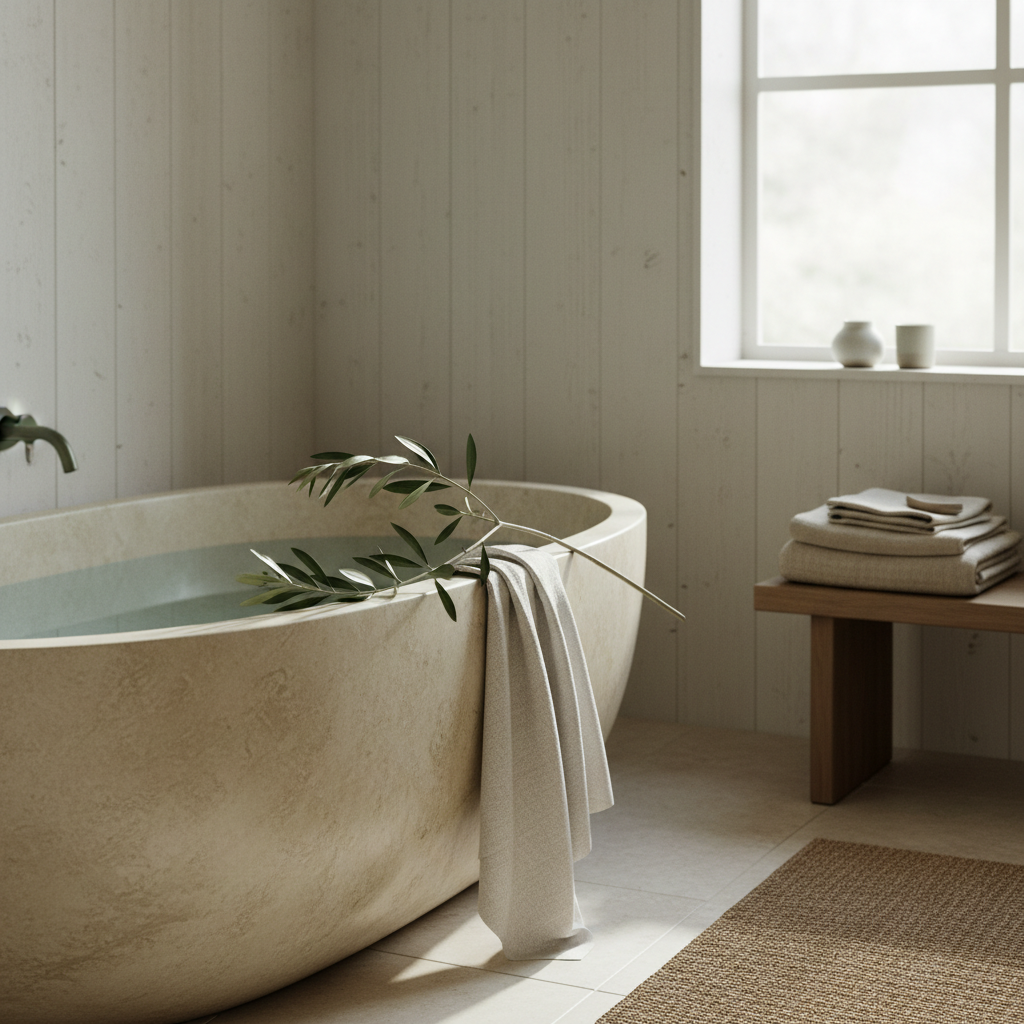
The bedroom is the first and last room we see each day, yet we have begun to treat it as an afterthought. It is a space defined not by its primary purpose, but by the overflow from a life that has too much. It is the depot for the exercise bike, the chair piled with clothes, the half-read books, and the laptop, still warm from a day’s work.
This accumulation is a quiet problem. We come to the bedroom seeking rest, a state of disconnection, but find ourselves in a room that is a physical manifestation of our daily anxieties. It is a space so crowded with the artifacts of waking life that it offers no clear invitation to sleep. The room does not quiet the mind because the room itself is not quiet.
We have filled it with screens that glow with artificial light, with desks that anchor us to our professional obligations, and with the general detritus of a connected existence. The ambient stress of a life lived elsewhere follows us into the one space that should offer sanctuary from it. We ask the room to be an office, a cinema, and a boudoir, all while demanding it perform its core function without compromise.
A bedroom designed for the morning is a bedroom designed against the night.
The result is a space that is perpetually in-between. It is not optimized for focused work, nor is it truly conducive to deep rest. Its utility is fractured, its purpose diluted. We spend a third of our lives here, yet we have designed it to serve the other two-thirds, assuming that sleep will simply happen out of sheer exhaustion.
The Eight-Hour Room
To design a bedroom for the eight hours requires a deliberate subtraction. It means curating a space not for what you do when you are awake in it, but for the quality of your unconsciousness. This is not a matter of expensive materials, but of intentional emptiness. It is an exercise in creating a sensory calm.
This room values textures that are soft to the touch and a palette that is muted and gentle on the eye. Light is filtered, either by linen curtains during the day or through warm, low-lumen lamps in the evening. There is an absence of clutter, not for the sake of a severe minimalism, but to reduce cognitive load. Every object in the room should serve the singular purpose of rest.
The eight-hour room is dark. It is cool. It is quiet. It is, above all, a space that gives permission to disconnect. It suggests that the day is over and that the obligations of the world can be left outside its door. This is not a room for scrolling through feeds or answering one last email; it is a room for breathing.
By dedicating the space to its nocturnal purpose, we paradoxically enhance our waking hours. A bedroom that successfully delivers rest yields a sharper, more present version of ourselves to the world each morning. It is a room that works by being still.
The longer reading on the wellness house, with plates and a directory of Across Europe, lives in Edition V of the magazine.
The longer reading lives in the magazine.
This essay is one observation. Edition V carries the plates, the studies and the directory of Across Europe — thirty pages, on uncoated stock, posted across Europe.
Continue reading
All essays → Editorial · 8 min
What a house is worth, and what it costs
On the difference between price and value, and why we have stopped using the first to describe the second.
 Markets · 11 min
The quiet market
Why the most interesting European homes are no longer listed, and what that means for the people looking for them.