The Shade of a Provençal Wall
The white walls of Provence are a celebrated feature of the region, yet they are rarely white at all.
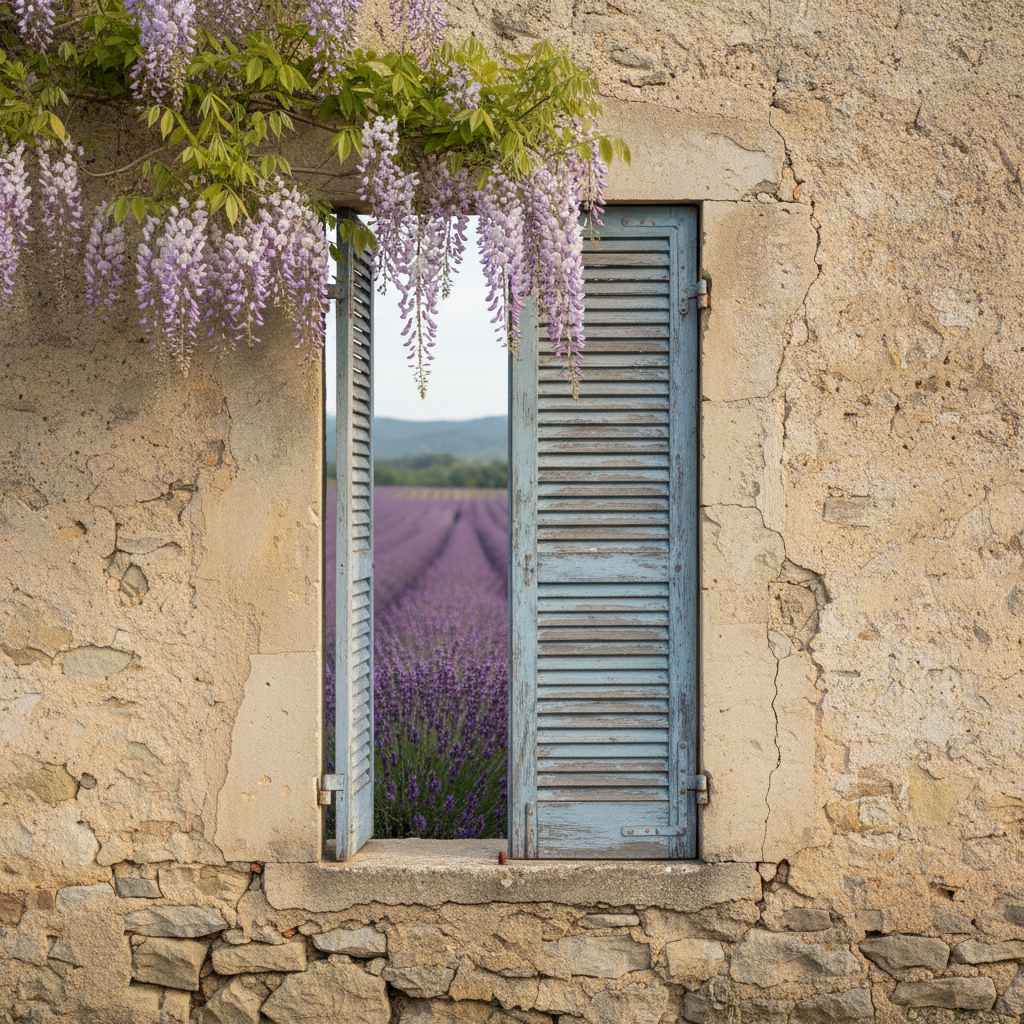
To picture a house in Provence is to picture a wash of white against a blue sky. The image is a pleasant one, and not entirely wrong, but it is incomplete. The chalky, sun-bleached façades that define the region’s architecture are deceptive. Get closer. In the right light, you will see that the walls are not, in fact, white. They are a thousand shades of yellow, pink, and red, loaned to them by the very earth on which they stand.
The story of this color begins in Roussillon, a village perched in the heart of the Luberon. For centuries, this area was the center of a global ochre trade. The surrounding hills contain some of the world’s largest and purest deposits of the pigment, a natural earth rich in iron oxide. From the late eighteenth century until the decline of the industry in the twentieth, this landscape was quarried, mined, and processed, sending its color across the world.
The quarries themselves are extraordinary. A walk through the old ochre trails reveals a landscape of impossible color. Cliffs and canyons of deep red, vibrant orange, and pale yellow cut through the green of the pine forests. It is a startlingly artificial sight, as if paint has been poured over the land, yet it is entirely natural. This is the raw material palette of Provence.
This abundance of pigment shaped the region’s built environment. While ochre was exported for use in fine arts and industry, it also found a more humble, local application. When mixing plaster, or *enduit*, to coat the exterior of a stone farmhouse or a village home, the mason did not need to look far for color. A measure of the native, ochre-rich earth was blended in.
The Earth in the Walls
The result is a wall that is not painted, but pigmented throughout. The color is not a thin veneer applied to the surface; it is an integral part of the structure’s skin. This lends the architecture of Provence a unique depth and permanence. The color does not flake or fade in the same way as paint, but weathers with the stone, mellowing under the sun and the persistent Mistral wind.
A Provençal wall is a record of the place, a mineral memory held in the stone.
The spectrum is subtle and varied. Depending on the precise mineral composition of the soil from which it was taken, an *enduit* might cure to a pale, buttery yellow, a dusty rose, or a warm, sandy beige. These are the true colors of Provence. They are soft, quiet tones that harmonize with the surrounding landscape of lavender fields, olive groves, and terracotta roofs.
This is not a decorative choice so much as a geological reality. The use of local materials was a matter of practicality and economy, a tradition that gave the region its distinct architectural vernacular. The color of a Provençal wall is not an aesthetic statement in the modern sense; it is a simple expression of place.
To see this color is to understand the region on a deeper level. It is to look past the romantic, postcard image of stark white walls and appreciate the material truth of the buildings. In the soft light of morning or the warm glow of late afternoon, the subtle hues emerge. The walls are alive with the color of the earth.
This quiet observation—of a landscape, its material, and the architecture it creates—is explored with greater depth in Edition IV of our journal. The edition includes a full directory and plates from Provence, France.
The longer reading lives in the magazine.
This essay is one observation. Edition IV carries the plates, the studies and the directory of Provence, France — thirty pages, on uncoated stock, posted across Europe.
Continue reading
All essays → Editorial · 8 min
What a house is worth, and what it costs
On the difference between price and value, and why we have stopped using the first to describe the second.
 Markets · 11 min
The quiet market
Why the most interesting European homes are no longer listed, and what that means for the people looking for them.