The Slow Work of a Kept Place
In the cork forests of Alentejo, the land offers a lesson in stewardship that unfolds over a decade.
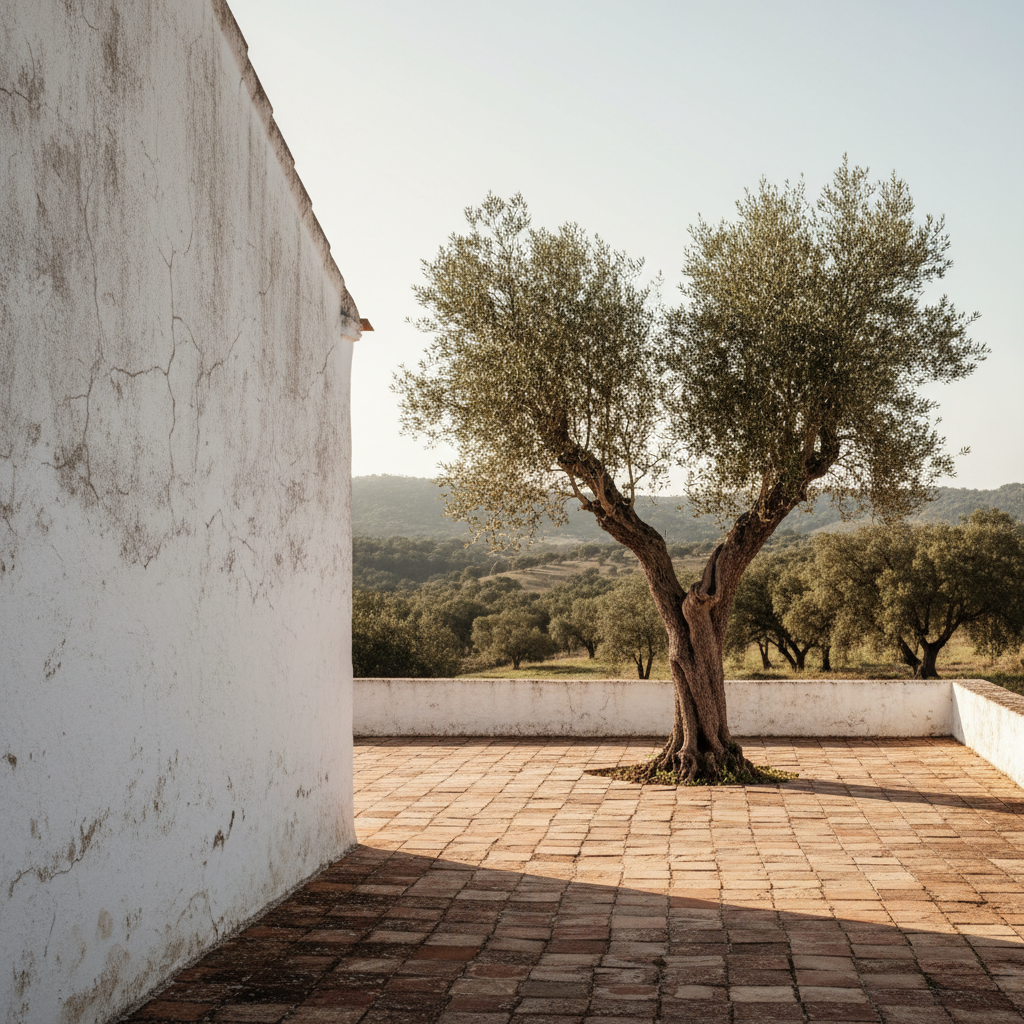
To drive through the Alentejo is to witness a landscape in quiet conversation with time. The region, which makes up a third of Portugal, is a place of rolling plains, ancient olive groves, and the scattered, whitewashed hills of its towns. But its defining feature is the montado, the vast, managed woodlands of cork oak trees that have shaped its economy and its character for centuries.
These are not dense, wild forests. They are deliberate and park-like, with the trees given ample space to spread their canopies. In their shade, the air cools. The ground, a carpet of grasses and wildflowers, is soft underfoot. Here, the modern impulse to hurry, to extract, to consume, finds little purchase. The land operates on a different schedule.
Central to this rhythm is the descasque, or the stripping of the cork. It is a practice governed by a patient, nine-year cycle. After a sapling is planted, it must grow for twenty-five years before its first harvest. That initial cork, known as virgin cork, is rough and uneven. It is the second harvest, nine years later, that yields a better quality. Only on the third harvest, and every nine years thereafter, does the tree produce the fine-grained amadia, the cork of the highest grade.
The process is one of immense skill, performed by workers with specialized axes who must cut only to the right depth, freeing the valuable bark without harming the living tree beneath. Once stripped, the trunks glow a remarkable, raw sienna against the grey-green leaves. A single digit is painted on the trunk to mark the year of its last harvest—a 4, a 7, a 9. Driving the back roads, one can read the recent history of the forest on the trees themselves.
The Measure of a Place
To own a small piece of Alentejo, a quinta with its own stand of oaks, is to be given a new measure of time. A property is not a static asset but a participant in this long, slow cycle. The trees you inherit may have been stripped three years ago, meaning you will wait another six for their harvest. The new oaks you plant will not yield their best cork in your lifetime, but in that of your children.
To own a small piece of Alentejo is to be given a new measure of time.
This long-term perspective redefines the meaning of ownership. It moves beyond the transactional and toward the custodial. One does not simply possess the land; one tends to it. The house, too, settles into this rhythm. The thick lime walls, cool in summer and warm in winter, ask for maintenance, not renovation. A cracked tile is replaced. A wall is repainted with lime wash, as it has been for generations. These are acts of keeping, not of changing.
The house and the land breathe together. The decisions one makes are informed by the seasons, by the slow growth of the olives and the patient wait for the cork. It is a relationship that discourages haste and rewards observation. You learn the way the light falls across the terrace in winter, the specific sounds of the evening, the resilience of a tree that gives of itself without being diminished.
This approach stands as a quiet counterpoint to the prevailing view of property as a fast-moving commodity. It suggests that a place is not something to be merely acquired and disposed of, but something to be understood. The true value reveals itself not in a market appraisal, but over the course of a decade, in the shade of a growing oak.
The longer reading, with plates and a directory of Alentejo, Portugal, lives in Edition I of the magazine.
The longer reading lives in the magazine.
This essay is one observation. Edition I carries the plates, the studies and the directory of Alentejo, Portugal — thirty pages, on uncoated stock, posted across Europe.
Continue reading
All essays → Editorial · 8 min
What a house is worth, and what it costs
On the difference between price and value, and why we have stopped using the first to describe the second.
 Markets · 11 min
The quiet market
Why the most interesting European homes are no longer listed, and what that means for the people looking for them.