The Slow Work of a Sweating Wall
In the sherry bodegas of southern Spain, architecture is not a container for the work, but a participant in it.
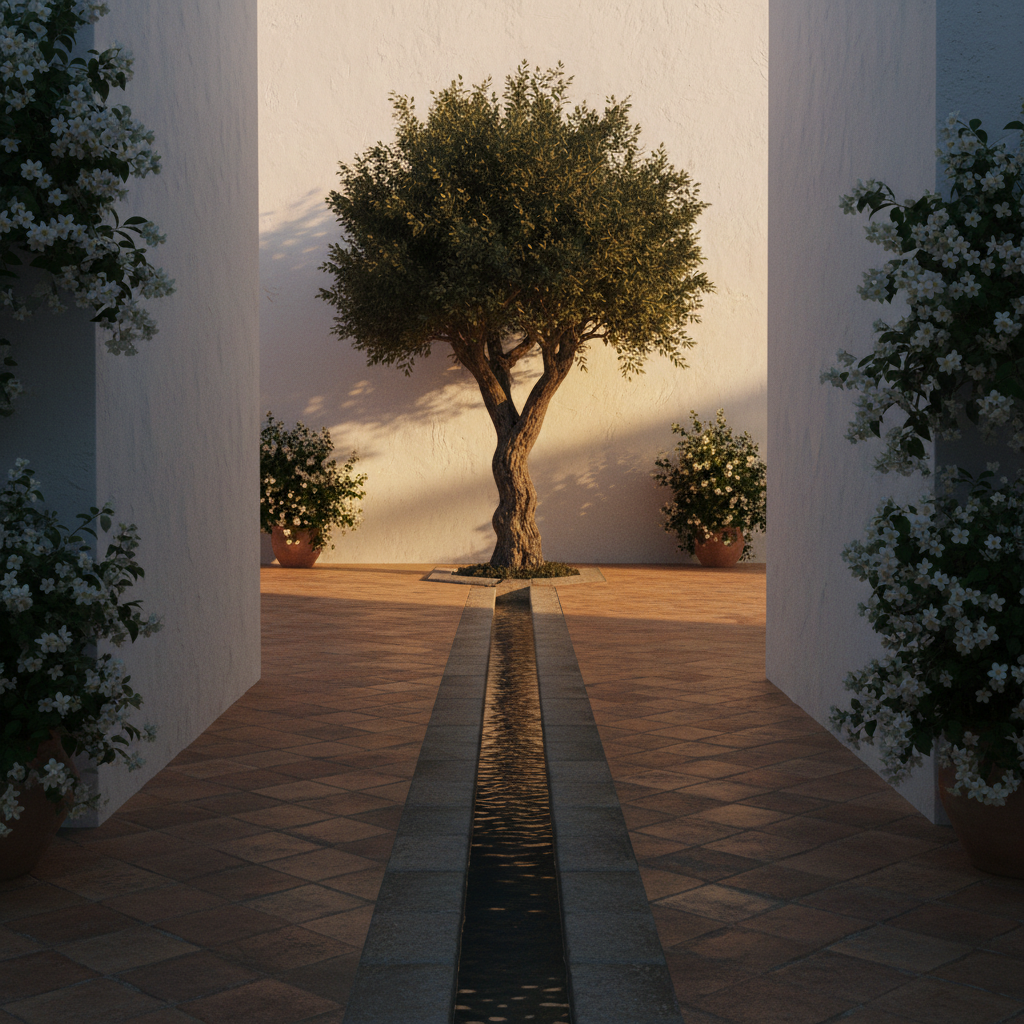
To step into a sherry bodega in Jerez de la Frontera is to leave the bright, percussive heat of Andalusía behind. The air immediately cools. The scent is of old wood, damp earth, and the singular, nutty aroma of flor, the veil of yeast that gives sherry its character. High above, narrow windows, often oriented to catch the steady sea breeze, slice the cathedral-like darkness with spare, geometric light.
This atmosphere is not an accident of time, but the primary function of the building itself. The bodega is a machine for aging, a purpose-built vessel designed to create a very specific environment of high humidity and stable, cool temperature. Unlike a modern, hermetically-sealed factory, however, the bodega achieves this by working in conversation with the local climate, not by brute force against it.
The key to this delicate negotiation is the walls. These are not inert barriers. Traditionally built of thick, porous earth and stone and finished with a whitewash of lime, or ‘cal,’ they are designed to breathe. Through the cool, humid nights, the walls absorb moisture from the air. As the sun climbs and the day heats up, they slowly release this moisture back into the interior, cooling the space through evaporation.
This is what is meant by a ‘sweating’ wall. It is an architecture that participates in the slowness of its purpose. The sherry in the casks, or ‘botas,’ develops over years, decades, even centuries, a gradual and patient alchemy. In parallel, the building performs its own slow, cyclical work: inhaling the night and exhaling a cool, humid breath all day. The building is not mere shelter; it is a collaborator in the craft.
The building does not just house the sherry; it raises it.
This process imbues the space with a palpable sense of life. The walls are cool to the touch, even at the height of summer. They mottle and stain over generations, recording the passage of time in their very material. They register the humidity of a wet spring or the dryness of a long summer, and the cellar master, the ‘capataz,’ learns to read the building as he reads the wine.
The Work of Stillness
This approach stands in quiet opposition to the ideals of modern construction, which so often seek to conquer an environment, to seal it out with impermeable membranes and replace its natural rhythms with the hum of machinery. The bodega suggests a different relationship, one of empathy between a structure and its place. The building’s performance is entirely dependent on the specific qualities of the Andalusian climate—its Atlantic breezes, its humid nights, its intense sun.
This vernacular wisdom is a form of inherited knowledge, passed down through generations of builders and winemakers who understood that the most elegant solution is often the one that defers to its surroundings. The high ceilings allow hot air to rise far above the casks. The orientation of the rectangular structures, typically northwest to southeast, is precisely calculated to minimize direct sun exposure while capturing the prevailing ‘poniente’ wind.
There is a lesson here, in the patient work of a sweating wall. It speaks to a more considerate way of building, one that finds its intelligence not in technology, but in a deep reading of place. It is an architecture of nuance, where the most important work is done in the quiet stillness of a southern afternoon, in the subtle exchange between a wall and the air.
Further reading on the vernacular architecture of southern Spain, with original plates and a private directory to the region, is available in Edition II.
The longer reading lives in the magazine.
This essay is one observation. Edition II carries the plates, the studies and the directory of Andalusía, Spain — thirty pages, on uncoated stock, posted across Europe.
Continue reading
All essays → Editorial · 8 min
What a house is worth, and what it costs
On the difference between price and value, and why we have stopped using the first to describe the second.
 Markets · 11 min
The quiet market
Why the most interesting European homes are no longer listed, and what that means for the people looking for them.