The Stillness Of The Unused Room
We have filled our homes with tools for productivity and entertainment. Perhaps it is time to design for stillness.
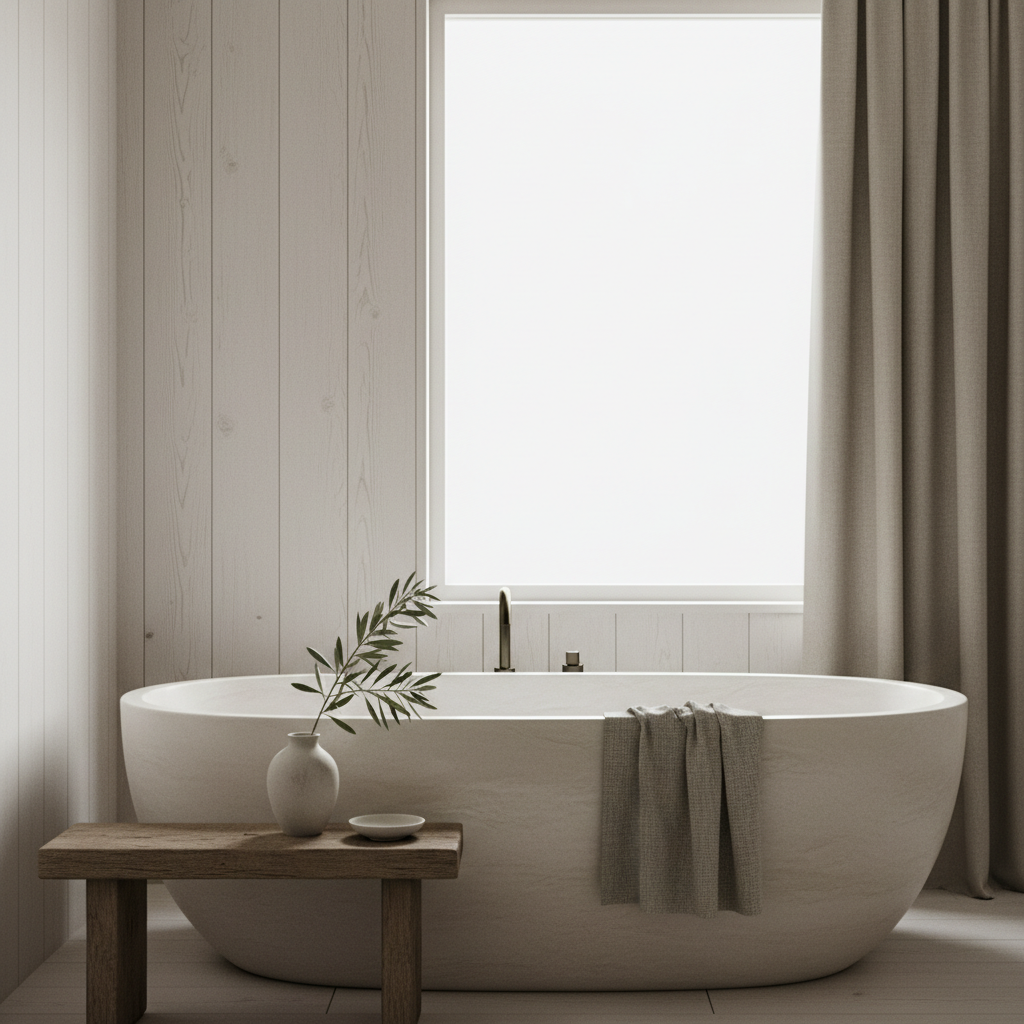
Every room in the modern home is an engine of purpose. The kitchen is a laboratory for nourishment, the office a dock for enterprise, the bedroom a station for recharging. We measure our spaces by their utility, their efficiency, their capacity to do something for us. This logic is so ingrained that we rarely question it.
This framework of optimization has bled into our hours of leisure. Living rooms are now home cinemas. Guest bedrooms double as home gyms. Even the bathroom has been reframed as a domestic spa, a place for multi-step routines and bio-hacking. There is a constant, low-hum pressure to be productive, even in our rest.
What if we refused this? What if a room’s purpose was to have no purpose at all? This is not a meditation room, which has an explicit goal of mindfulness. It is not an empty room, awaiting a project. It is a finished space, intentionally designed to expect nothing from its occupant.
A room designed for nothing is a statement against the endless demands of modern life.
Imagine a comfortable chair that is not ergonomic, placed not to face a screen but a window. A small table holds not a smart speaker but a single, heavy object of no particular function. The light is gentle, the materials are natural, and the acoustics are soft. The air is still.
This is not about minimalism for its own aesthetic sake, which can be just as demanding as maximalism. It is not an exercise in asceticism. It is an act of Architectural Quiet, a space defined by what it is not for.
The Room as Question
Such a space prompts a different kind of engagement. With no task to perform, no media to consume, no goal to achieve, the mind is left to its own devices. It is a room that asks: what happens when nothing has to happen? For many, the initial answer is discomfort. We are so conditioned to be directed that the absence of direction can feel like a void.
With time, this void can become a canvas. The room offers a rare permission to simply be. It is a space for idle thought, for daydreaming, for the slow, unstructured processing that often precedes genuine insight. It is an architecture of non-demand, a physical manifestation of negative space.
The value of such a room cannot be measured in productivity gains or wellness metrics. Its return on investment is of a different, more elusive kind. It offers a pocket of resistance against the cult of efficiency, a sanctuary not for something, but from everything.
The principles of this room can be applied on a smaller scale, of course. A corner, a nook, a single chair oriented toward nothing in particular can achieve a similar effect. The goal is to carve out a small geography of grace in a world that aims to optimize every square inch of our lives.
The longer reading on the wellness house, with plates and studies from Across Europe, lives in Edition V of the magazine.
The longer reading lives in the magazine.
This essay is one observation. Edition V carries the plates, the studies and the directory of Across Europe — thirty pages, on uncoated stock, posted across Europe.
Continue reading
All essays → Editorial · 8 min
What a house is worth, and what it costs
On the difference between price and value, and why we have stopped using the first to describe the second.
 Markets · 11 min
The quiet market
Why the most interesting European homes are no longer listed, and what that means for the people looking for them.