The Stone That Learns The Rain
In the hills of Tuscany, masons leave their stone unfinished to better tell the story of the weather.
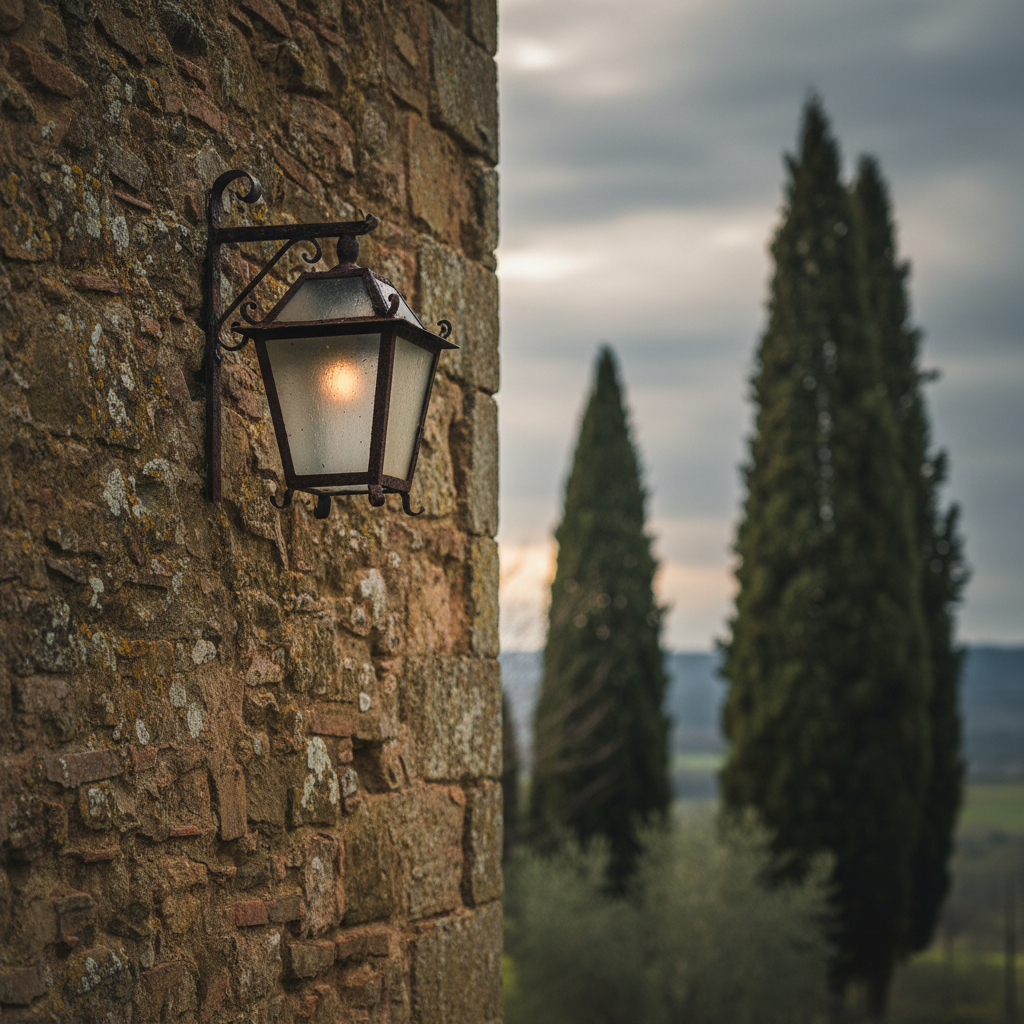
It is a quiet truth of central Italy that the stone remembers. In the hills above the Arno, where the cypresses define the ridgelines, the walls of farmhouses and monasteries are a record of the sky. They are built from the local earth, and they carry the hue of the soil and the temperament of the winter cloud.
The material is not the pristine marble of Carrara, but a more humble and porous stone. Pietra serena, perhaps, or a local variant of alberese limestone. Run a hand along its surface, and you will not find the sterile smoothness of a polished slab. You find, instead, texture. A landscape in miniature.
This roughness is not an accident, nor is it a sign of incomplete work. It is a deliberate decision on the part of the mason. A philosophy of building that extends beyond the plumb line and the set square. It is a gesture of deference to a force greater than the hand that lays the stone.
To the mason, a perfectly smooth wall is a kind of falsehood.
A polished surface suggests an end to the story. It is an architecture of defiance, repelling the environment, shedding water and light without comment. It stands in opposition to the world around it, attempting to assert a kind of timeless, sterile perfection. But in the Tuscan countryside, time is not an enemy to be defeated. It is a collaborator.
The mason leaves the stone rough for the rain. A smooth wall would force the water off in sheets, leaving no trace of its visit. An unfinished surface, however, invites it to stay. To find a purchase, to trace the rivulets and crags left by the chisel.
The Memory of Water
Watch a wall during a downpour, and you see the design come to life. The water does not simply fall; it performs. It darkens the stone in patches, lingers in the hollows, and charts slow, deliberate paths downward. Over a decade, these paths become faint channels. Over a century, they become character.
This is how the stone learns the rain. It develops a patina that is not uniform, but specific to its orientation to the sun, the wind, and the prevailing weather. Algae and lichen find their own particular niches, adding shades of green and grey to the foundational ochre.
The wall becomes a living chronicle of its own small climate. One side may be paler, another darker. One section may be host to moss, while another, more exposed to the wind, is scoured clean. It is a testament to the idea that a structure can be in dialogue with its surroundings, rather than merely occupying them.
The result is an honesty of material and form. The building speaks not only of its construction but of its existence. Its long, quiet, patient life under an Italian sky. It is a beauty born not of resistance, but of dignified surrender.
The longer reading on the patience of stone, with plates and a directory of Tuscany, Italy, is available in Edition III of our journal.
The longer reading lives in the magazine.
This essay is one observation. Edition III carries the plates, the studies and the directory of Tuscany, Italy — thirty pages, on uncoated stock, posted across Europe.
Continue reading
All essays → Editorial · 8 min
What a house is worth, and what it costs
On the difference between price and value, and why we have stopped using the first to describe the second.
 Markets · 11 min
The quiet market
Why the most interesting European homes are no longer listed, and what that means for the people looking for them.