The Stone That Remembers the Rain
In Tuscany, the rain does not merely fall upon the stone; it is recorded into its very texture by design.
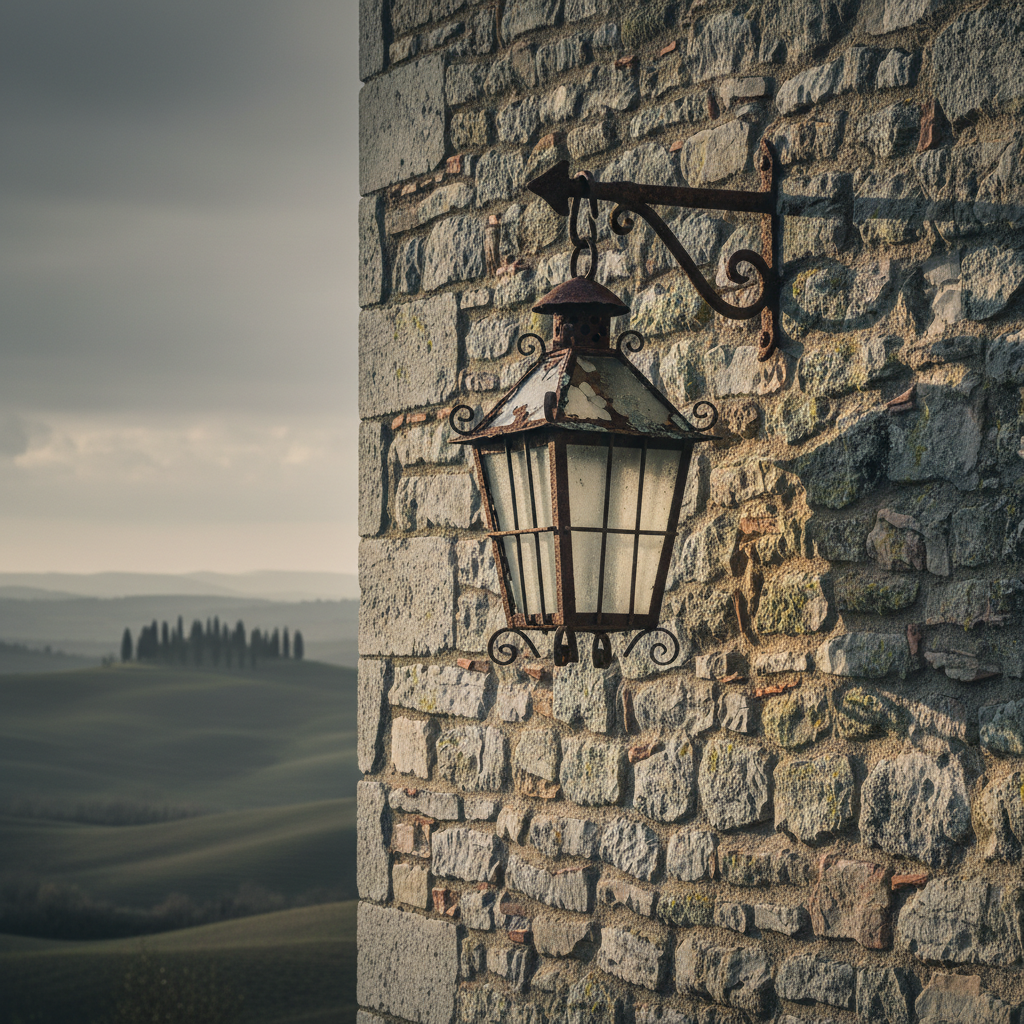
The light in Tuscany is a presence, but the rain is a conversation. When it comes, it is not an interruption to the landscape but a participant within it, drawing a grey veil over the olive groves and turning the dirt roads into soft, dark clay. It is the rain that gives the stone of the region its voice, and its memory.
On the ancient farmhouses, or casali, that watch over these valleys, the stone is a constant register of the weather. It darkens from silver-grey to near-black as the water settles, and it holds the damp long after the sky clears, releasing it slowly to the air. It is a material that breathes.
To a modern eye, these walls can appear unfinished. They lack the clean, sheer surfaces of contemporary construction. Instead, one finds a textured field of chisel marks and minor inconsistencies, a topography of deliberate imperfections. The temptation is to see this as a rustic affectation, or perhaps the simple limit of older tools.
The truth is more patient. The masons who built these structures understood stone not as an inert medium to be conquered, but as a collaborator. They knew its character, its tendencies, and its relationship with the place from which it was quarried. They knew it had a capacity to learn.
A finished wall is a monologue. A rough wall is a conversation that outlives its mason.
This roughness is a choice, an invitation to the elements. Each groove and uneven plane creates more surface area, a miniature landscape for the rain to navigate. Water is not shed and repelled, as with a sealed facade, but welcomed. It is encouraged to cling, to find its way into the life of the wall, and to leave a part of itself behind.
The Patina of Place
Over seasons and centuries, this interaction creates a patina that is a record of time. The mineral deposits in the rain leave subtle stains. Airborne spores of lichen find purchase in the textured surfaces, painting shades of pale green and ochre that shift with the humidity. The wall does not simply age; it accrues a history of its specific place in the world, a slow map of every storm and quiet mist it has endured.
This is an architecture of patience. A building is not considered complete once the last stone is set. It is merely the beginning of a long settling-in, a process of being absorbed by the landscape that may take a thousand years. It is an acceptance that the truest beauty is not imposed upon a material, but cultivated from its inherent nature.
To live within such walls is to be in proximity to this deep, quiet process. The house is not a static object but a witness, its surface a testament to the slow, unhurried rhythm of the land itself.
This dialogue between material and weather is a quiet language spoken across Tuscany. The longer reading, which features plates of the region’s notable masonry and a directory for further study, can be found in Edition III of our journal.
The longer reading lives in the magazine.
This essay is one observation. Edition III carries the plates, the studies and the directory of Tuscany, Italy — thirty pages, on uncoated stock, posted across Europe.
Continue reading
All essays → Editorial · 8 min
What a house is worth, and what it costs
On the difference between price and value, and why we have stopped using the first to describe the second.
 Markets · 11 min
The quiet market
Why the most interesting European homes are no longer listed, and what that means for the people looking for them.