The Unchanging Face of Tuscany
The UNESCO World Heritage designation is a covenant not with the present, but with the deep past.
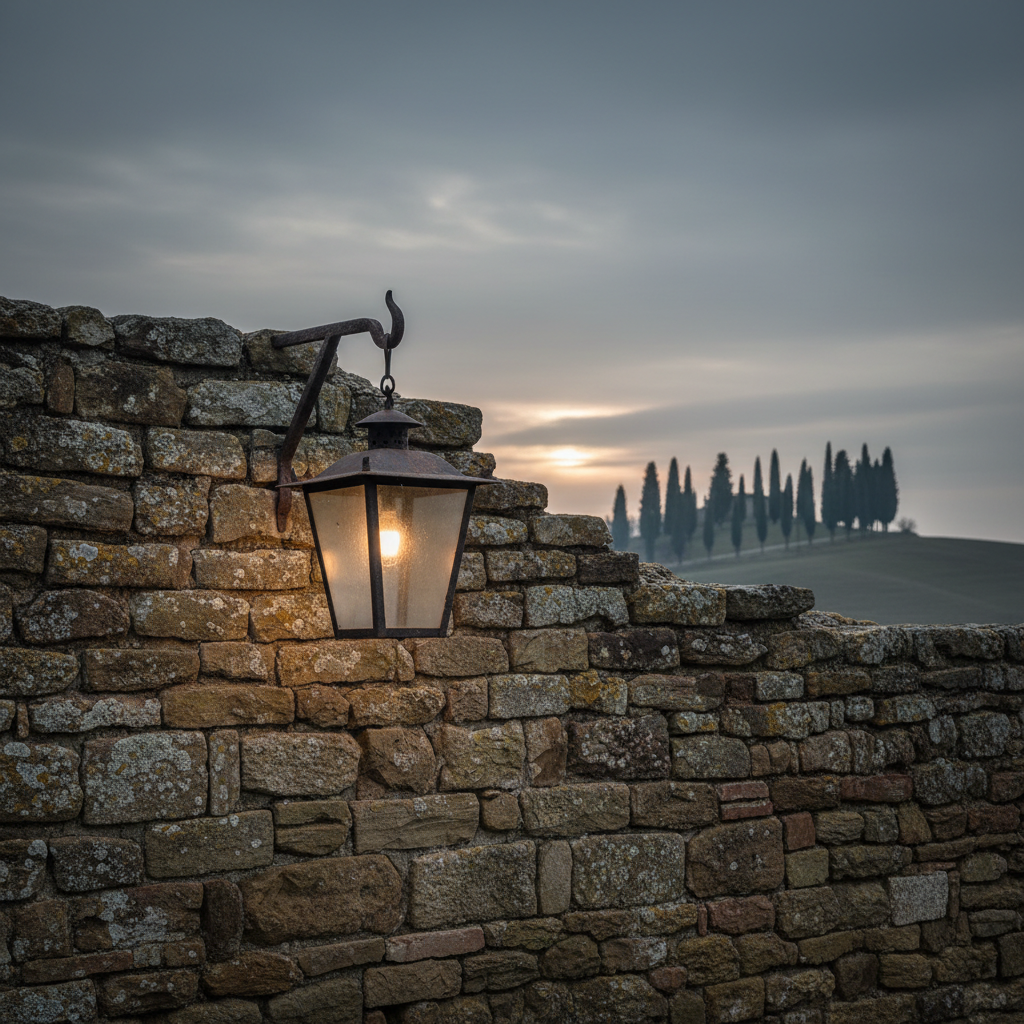
To visit the Val d’Orcia in Tuscany is to step into a landscape that feels pre-arranged by memory. The rolling hills, the sentinel cypresses, the farmhouses of fieldstone—they all seem to exist outside of time, εικόνες that have settled deep into the cultural consciousness. We feel, instinctively, that this place has always looked this way. This feeling is not an accident. It is the result of a deliberate, and often misunderstood, act of preservation.
The force that holds this landscape in its perfect, quiescent state is the United Nations Educational, Scientific and Cultural Organization, or UNESCO. When a place is inscribed on the World Heritage List, as the Val d’Orcia was in 2004, it is recognized as having “outstanding universal value.” This designation is a compact made between a nation and the global community to protect a site for future generations. It is a promise to let nothing essential about it be lost.
What is being preserved here is not a single monument, but an entire cultural landscape. The hills and farms of the Val d’Orcia were shaped by Renaissance painters and Sienese merchants, who conceived of an idealized countryside where beauty and agricultural utility were one and the same. The farmhouses are not incidental structures; they are compositional elements, placed with an artist’s eye for perspective and harmony. The cypress-lined roads are not just for passage; they are for contemplation.
To live within this landscape is to inhabit an idea. The farmhouses scattered across these hills are, for the most part, private homes. Yet their owners are not free to alter them as they see fit. They are custodians of an artifact, and their stewardship is governed by a strict set of rules that extend to the smallest details of domestic life.
The Patience of Stone
The regulations that govern construction and renovation within a World Heritage Site are designed to enforce a kind of architectural continuity. One cannot simply add a modern extension, install a new style of window, or paint a door an unapproved color. Any change must be justified, not by the owner’s convenience, but by its deference to historical precedent. The materials must be traditional—the same stone from the same quarries, the same terracotta for the roof tiles, the same species of wood for the beams.
This creates an inherent and fascinating tension. The daily needs of a family in the twenty-first century must negotiate with the aesthetic legacy of the fifteenth. A desire for more light, a larger kitchen, or better insulation runs up against a mandate to maintain the precise visual character of a building that was designed for a different way of life, centuries ago.
To live in a World Heritage Site is to accept that your home is not yours alone.
The house becomes a vessel for a cultural memory larger than any single occupant. Its allegiance is not to the comfort of the person who sleeps there, but to the integrity of the landscape it helps to create. UNESCO’s protection is not sentimental. It is a rigorous, almost academic, enforcement of a historical ideal. It prioritizes the collective inheritance over individual prerogative.
The result is a stasis that feels both profound and unnatural. The world outside the site’s boundaries is subject to the familiar churn of development, renovation, and decay. But here, change happens on a different timescale. The "patience of stone" becomes a legal requirement. The slow erosion of wind and rain is permitted, but the sudden intervention of a homeowner’s whim is not.
As visitors, we are the beneficiaries of this arrangement. The deep sense of peace and order that the Tuscan landscape imparts is a direct consequence of the limitations placed upon its inhabitants. We are, in effect, walking through a museum where the exhibits happen to be people’s homes.
These brief notes on heritage and its governance are part of a larger consideration. The longer reading, with plates and a directory of Tuscany, Italy, lives in Edition III of the journal.
The longer reading lives in the magazine.
This essay is one observation. Edition III carries the plates, the studies and the directory of Tuscany, Italy — thirty pages, on uncoated stock, posted across Europe.
Continue reading
All essays → Editorial · 8 min
What a house is worth, and what it costs
On the difference between price and value, and why we have stopped using the first to describe the second.
 Markets · 11 min
The quiet market
Why the most interesting European homes are no longer listed, and what that means for the people looking for them.