The Unseen Hand of Provence
In the quiet corners of the French countryside, a small economy of slow craft persists, anchored by the ancient art of soap-making.
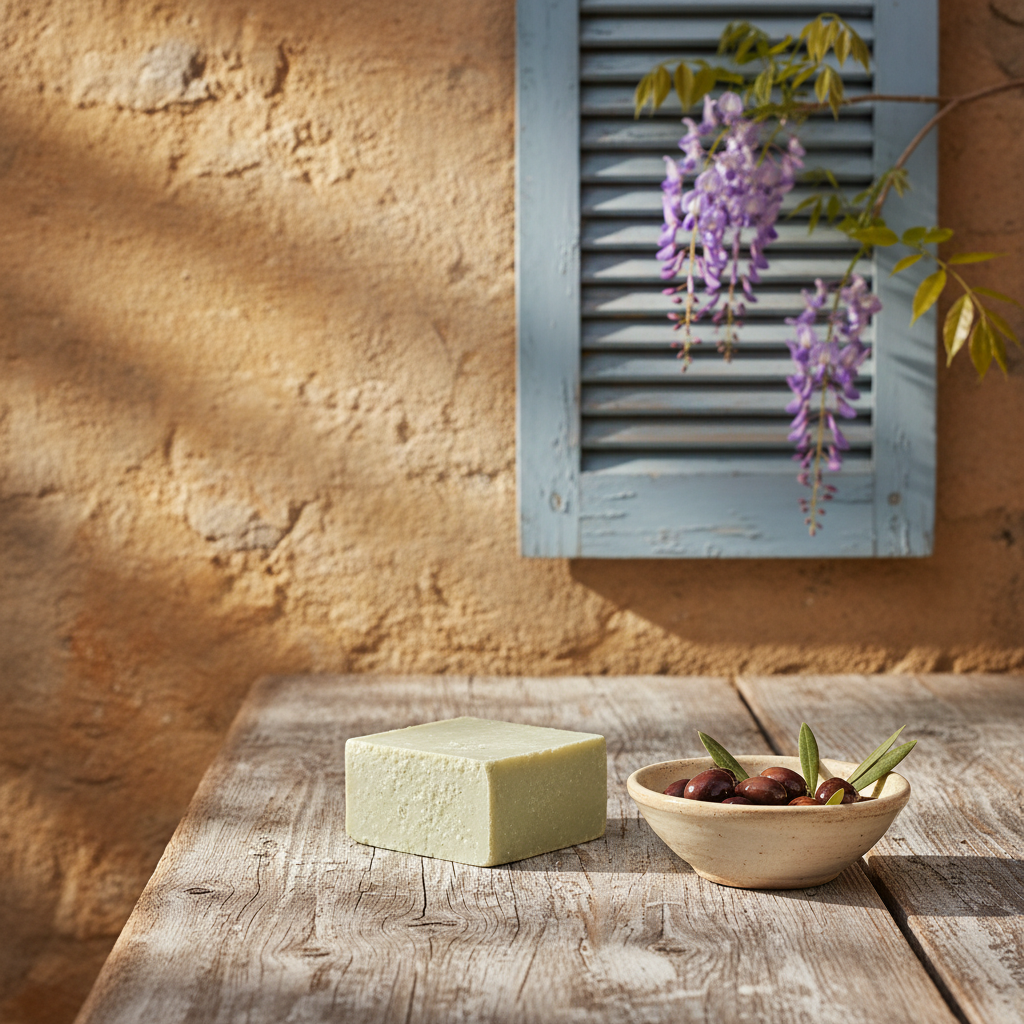
To walk through Provence is to move through a series of sensory impressions. The texture of old stone underhand, the scent of lavender carried on the breeze, the sight of cypress trees standing dark against a pale sky. It is a place that encourages a slower, more deliberate way of being, and in its small towns and workshops, this pace is not a luxury but a method.
Here, a quiet economy of slow craft endures. It operates on principles that stand in gentle opposition to the speed and scale of modern production. Its currency is time, its products are imbued with place, and its standard-bearer is a simple, perfect object: a bar of soap.
The authentic Savon de Marseille is not merely a cleansing product. It is the result of a centuries-old tradition, a craft so integral to the region’s identity that it is protected by law. The *Indication Géographique Protégée* (IGP) for this soap is a declaration of its importance, a line drawn in the sand to protect a cultural and economic legacy.
This protection is not a matter of sentiment. It codifies a precise and demanding process. True Savon de Marseille must be made in a specific geographical area, using traditional cauldrons and a saponification method that takes weeks to complete. It must contain a minimum of seventy-two percent vegetable oil, with no added perfumes, colorants, or synthetic additives.
The soap itself is not the only thing being preserved, but a way of life that values patience and provenance.
The IGP ensures that when you hold a block of this soap, you are holding something authentic. It distinguishes the genuine article from mass-produced imitations that borrow the name but not the method. This legal shield allows small, family-owned *savonneries* to sustain their work, competing not on price, but on a guarantee of quality that is anchored to a place.
The Geography of Scent
This ecosystem of craft extends beyond the *savonnerie*. The olive groves and lavender fields of Provence are not just scenery; they are the source of the raw materials that form the basis of this local economy. The farmer, the miller, and the soap-maker are connected in a chain of production that is as much about mutual reliance as it is about commerce.
The concept of *terroir*, often reserved for wine, applies here as well. The quality of the olive oil, the character of the lavender, the very air that dries the soap—all are conditioned by the specific geography and climate of Provence. The final product is a distillation of the place itself, a sensory souvenir of the sun, the soil, and the mistral wind.
Choosing to buy a bar of authentic Savon de Marseille is, in its own small way, an act of patronage. It is a vote for a system that prioritizes heritage over haste, and quality over quantity. It supports the artisans who have resisted the pull of industrialization, dedicating themselves instead to the careful preservation of a single, humble craft.
The value of such an object lies not just in its use, but in its story. It is a connection to a specific corner of the world, a reminder that the most essential things are often the result of a slow, considered process. It is an antidote to the disposable, a small piece of permanence in a transient world.
Further explorations of the Provençal way of life, with original photography and a directory of the region, are found in Edition IV of our journal.
The longer reading lives in the magazine.
This essay is one observation. Edition IV carries the plates, the studies and the directory of Provence, France — thirty pages, on uncoated stock, posted across Europe.
Continue reading
All essays → Editorial · 8 min
What a house is worth, and what it costs
On the difference between price and value, and why we have stopped using the first to describe the second.
 Markets · 11 min
The quiet market
Why the most interesting European homes are no longer listed, and what that means for the people looking for them.